



Do You Need a TEFL to Teach Abroad?
Short, honest answer: yes for most countries, no for a few, and the version of you who skips it usually regrets it within six months. Most teaching jobs abroad legally require a TEFL certificate (Spain, Germany, the Czech Republic, Portugal, Poland and Hungary all mandate it for work visas), and the ones that don't tend to pay less, hire less, and disappear faster. Here's the full picture.
If you've ended up on this page, you're probably already deep in the "should I teach abroad" research wormhole. Twelve tabs open. A spreadsheet comparing Vietnam and Spain. One YouTube video that made it look easy and another that made it look impossible. And somewhere in the middle of all of that, the question landed: do I actually need this certificate, or is it a thing course providers invented to sell courses?
Fair question. Also: it's a bit of both. Soz.
This article is the version of the answer that isn't trying to sell you a course in the first paragraph. We'll cover what a TEFL actually is, where it's legally required, where it isn't, what happens if you wing it without one, how long it takes, how much it costs, and the smart way to get one if you decide it's the move.
Grab a coffee. Bin the spreadsheet. We got you!
The Quick Answer: Yes, Mostly, and Sometimes Not
Here's the breakdown without the sales pitch:
- Yes, in most countries that actually pay well: Spain, Germany, the Czech Republic, Portugal, Poland, Hungary, South Korea, Japan, and the UAE. These countries legally require a TEFL certificate (usually 120 hours minimum) for work visa approval. No certificate, no visa, no job. Simple.
- Technically no in a few places: Cambodia, Laos, Taiwan, India, and parts of Latin America. These countries have looser regulations and will hire native English speakers based on a degree alone. The trade-off is in the numbers: salaries are usually lower, job stability varies more, and you'll want to research individual schools carefully rather than assuming all roles are created equal.
- Absolutely yes for any long-term career: International schools, language institutes, online platforms, university positions, all of them require it for anything beyond entry-level. Skipping it is the kind of decision that closes doors at month six.
The TLDR for the genuinely impatient: if you're serious about teaching abroad for longer than a single short stint, a TEFL is the cheapest, fastest, most universally recognised credential you can get, and the ROI is wild. If you're truly just looking for a three-month gap-year detour, you might get away with skipping it in a few specific countries.
But the gap-year detour version is the one where most readers end up writing to us six months in asking how to get TEFL-certified anyway. Plan accordingly.
What a TEFL Actually Is
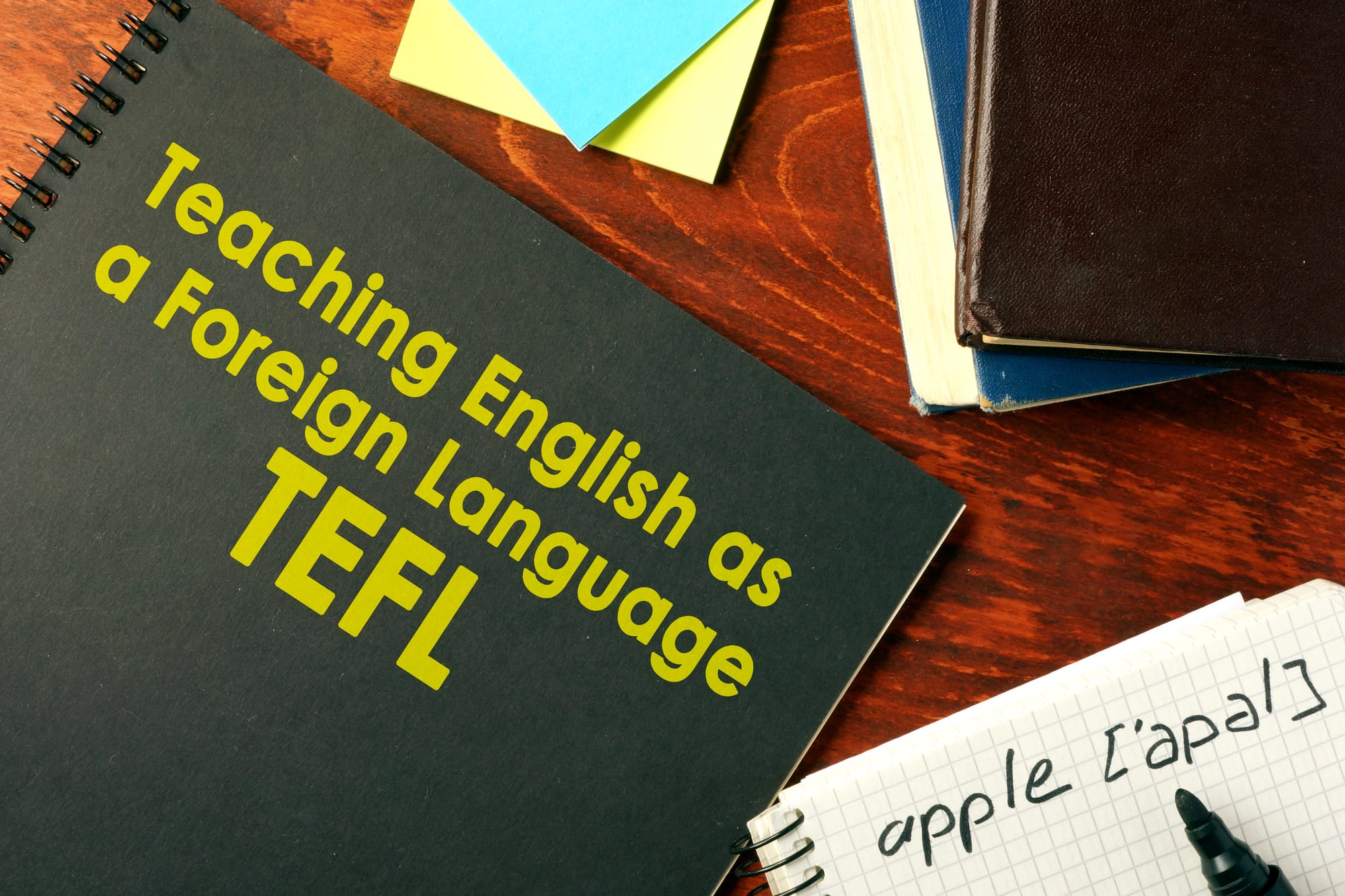
TEFL stands for Teaching English as a Foreign Language. It's an internationally recognised certification that qualifies you to teach English to non-native speakers anywhere in the world. The cousin certifications (TESOL, CELTA) cover similar ground with slightly different focuses, but TEFL is the most widely accepted globally and the one you'll see referenced in 95% of teaching abroad job ads.
What a good TEFL course actually teaches you:
- Classroom management: how to handle a room of thirty kids who don't share your language and may not particularly want to be there.
- Lesson planning: how to structure an hour of teaching so the students leave knowing something they didn't an hour ago.
- Grammar that you forgot existed: the rules behind why "I'm going to the shop" sounds right but "I going to shop" doesn't, which you'll need to explain to a fourteen-year-old who's asking for the third time.
- Cultural awareness: the not-trivial work of teaching across language and cultural gaps without accidentally being a colonial nightmare.
- Phonetics and pronunciation: the part that surprises everyone because pronunciation is harder to teach than you'd expect.
The industry standard is 120 hours minimum of coursework, ideally from a provider accredited by a third-party body (Ofqual, ACCET, or similar). Anything under 120 hours is generally not recognised for work visa purposes in the countries that legally require certification, so don't get talked into a "weekend TEFL crash course" by a sketchy ad on Instagram.
There are loads of ways to get certified, ranging from cheap online options to immersive in-person courses. Global Work & Travel runs 3 to 4 week classroom-based TEFL and TESOL courses in destinations like Thailand, Vietnam, and Spain, with accommodation, transfers, and job matching support built in. More on that further down. The point for now is: TEFL is real, it's structured, and it teaches you actual skills.
Countries Where You 100% Need a TEFL
Let's get specific. These countries have explicit legal requirements for TEFL or equivalent certification for English teaching work visas:
- Spain: 120 hour TEFL minimum, legally required for work visa approval. Spanish language schools and government Auxiliares de Conversación programs both require it.
- Germany: TEFL required for language schools; International schools require state certification.
- Cambodia: loose regulations, hires native speakers with degrees only. Lower salaries than the formalised markets. College degrees are not 100% required, but are favourable.
- Czech Republic: 120 hour TEFL or equivalent, with Prague and Brno specifically running on this requirement.
- Portugal: TEFL required for visa application. Lisbon's growing language school scene won't process your paperwork without it.
- Poland: TEFL required for teaching English at language institutes, which is the bulk of teaching work available to foreigners.
- Hungary: Same rule. TEFL minimum for visa eligibility.
- The UAE: Strict requirements. TEFL plus a degree plus often a year of teaching experience. The pay is excellent because the bar is high.
- India: large teaching market with a wide range of formalisation. International schools require TEFL plus a degree.
- Parts of Latin America: Native speakers can sometimes get teaching work with a degree alone, especially in informal language exchange settings, however for well-paid gigs that are formalised, you will need a TEFL.
The pattern across all of these: countries with structured economies and strong English-teaching demand have formalised the requirement to maintain quality control. The TEFL isn't bureaucratic gatekeeping. It's the country saying if you're going to stand in front of our kids, prove you know what you're doing. Fair game we say.
Countries Where You Can Skip It (And Why You Probably Shouldn't)
These countries don't have strict legal TEFL requirements and will hire native English speakers based on a degree alone:
- Laos: similar to Cambodia. Limited number of positions, modest pay.
- Taiwan: technically you don't need TEFL but most employers prefer it. The Foundation Cram Schools (buxiban network) often hire people with degree-only (not necessarily education centric), but salaries are noticeably lower than Korea or Japan.
- South Korea: E-2 visa regulations: Require bachelor's degree + criminal background check. TEFL is not a statutory requirement, however, you do generally need one to get hired.
- Japan: JET Programme does NOT require TEFL. Eikaiwa (private English conversation school) often prefers one, but not always required.
Now the honest part most articles don't tell you. Yes, you can technically teach in these places without a TEFL. But here's what your real-world year looks like if you do:
- Lower pay: anywhere from 20% to 50% less compared to TEFL-certified roles in the same country.
- Less reputable employers: the schools willing to hire uncertified teachers are usually the ones nobody else wants to work for. There's a reason they're not picky.
- Less job security: uncertified positions are typically the first ones cut when budgets tighten.
- No professional credential at the end: if you decide teaching abroad is something you want to do for longer than one year, you're back at square one having to do TEFL anyway.
- Limited mobility: you can't easily transfer to a country that does require TEFL without going back home, getting certified, and starting again.
The math usually works out the same way: people who skip TEFL to save money on the front end pay for it in lower salaries and limited options over the year. Most readers who choose this route end up getting certified by month eight regardless. Faster to just do it upfront.
What Happens If You Try to Teach Without One
Three real scenarios people land in when they skip TEFL and try to teach abroad anyway:
Scenario 1, the visa rejection. This is the one nobody talks about until it happens. You fly to Spain with a job offer in hand from a language school that "doesn't need certificates" only to discover that the Spanish embassy absolutely does need one for your work visa. The job offer becomes useless. You either fly home or shift to teaching cash-in-hand on a tourist visa, which is illegal and gets you deported when caught. This is happening to someone right now.
Scenario 2, the bottom-of-the-barrel job. You land in Vietnam or Cambodia, get hired by a small language centre that doesn't ask questions, and find yourself in a school with 15-hour days, kids who run the room, no support materials, and a salary that just covers your rent. You spend the year exhausted and underpaid wondering if teaching abroad was always going to be this disappointing. Spoiler: it wasn't, you just signed up for the version that was.
Scenario 3, the great-then-not-great timeline. You find yourself doing informal language exchanges, private tutoring, or cash-in-hand classroom work. The first three months are fun. Then the visa stress kicks in, the schools you actually want to work for keep rejecting you for not having TEFL, and the friends you made in TEFL courses are getting paid more, working better hours, and travelling on weekends because their schedule is set. Around month six, you ask yourself why you tried to skip the certificate. By month eight, you're enrolled.
The pattern is consistent. The version of teaching abroad without TEFL exists, technically. It's also harder, lower-paid, and shorter-lived than the version with TEFL.
How Long Does TEFL Take?
Depends entirely on how you choose to do it.
- Online TEFL (self-paced): anywhere from 10 to 12 weeks, depending on how much time you actually commit. The 120-hour standard course can be banged out in two intense weeks or stretched across three months of part-time evening study.
- Online TEFL (instructor-led): typically 4 to 6 weeks with structured deadlines and live sessions. Better for the people who need accountability to actually finish.
- In-person classroom TEFL (intensive): 3 to 4 weeks of full-time study, usually with real teaching practice built in. The most respected format because it includes face-to-face teaching observation.
- CELTA (the gold standard): 4 weeks intensive or 12 weeks part-time. Significantly harder than standard TEFL, recognised globally, and what you'd pursue if teaching abroad is going to be a real career rather than a year.
The timeline that matters: most people start their teaching abroad journey 3 to 6 months before they want to be on the plane. Getting TEFL-certified in the early part of that window is the move. Faster than you think.
How Much Does TEFL Cost?
Pricing varies dramatically depending on what type of course you do and where you do it. Without naming specific dollar figures (because they shift), here's the rough range:
- Cheap online TEFL: the lowest-end option, often available on platforms like Groupon. Beware. Most of these aren't accredited and won't be recognised for visa purposes. The "$20 TEFL" almost never works for the countries that legally require certification.
- Mid-range online TEFL: 120-hour accredited courses from reputable providers. Affordable, recognised globally, and the option most casual teachers go with. Solid value for money.
- Premium online TEFL with job matching: higher-end online courses that include CV support, job interview prep, and direct connections to hiring schools. Usually a few hundred to a thousand dollars on top of the base course.
- In-person classroom TEFL with accommodation: the most expensive option, but it bundles the course with accommodation, sometimes flights, transfers, cultural activities, and often a job match in the country you trained in. This is the route most Global Work & Travel travellers take because it folds the certification into an actual trip abroad.
- CELTA: Usually 4-week intensive courses delivered by independent institutions accredited by Cambridge.
The general rule: cheaper courses cost less upfront but often don't get recognised for the work visa applications that actually matter. Mid-range accredited TEFL is the sensible default for most people. Premium with job matching is the move if you want the trip and the certificate folded into one purchase.
The Smart Way to Do TEFL
If you've read this far, you've probably worked out the answer to the headline question. Yes, you need a TEFL for most teaching jobs abroad, and the version of the year where you have one is genuinely better than the version where you don't.
The smart way to get one: bundle it with the trip you were going to take anyway.
That's the Global Work & Travel Teach Abroad approach. Instead of doing your TEFL online from your bedroom and then booking a separate trip later, the structured option is to do the course in-country, train alongside other future teachers who become your friend group, and finish certified in a place you've already settled into.
What's actually in the packages:
These vary trip to trip and destination to destination, so read through all the inclusions of your preferred trip to ensure you're across all the ins and outs.
- The course itself: a 3 to 4 week classroom-based TEFL or TESOL course in destinations like Thailand, Vietnam, Spain, Italy, Japan, South Korea, Costa Rica, Argentina, or Cambodia.
- An internationally recognised certificate: awarded at the end of the course, recognised for work visa applications in the countries that legally require it.
- Accommodation throughout the course: sorted before you arrive, so you're not also house-hunting in your first weeks abroad.
- Airport transfers and arrival orientation: because nobody wants to figure out a foreign public transport system jet-lagged.
- Cultural activities and excursions: built into the course schedule.
- Job matching support: through Global Work & Travel's in-country partner network, so you finish certified with leads, not just a certificate.
- A dedicated Trip Coordinator: walking you through the visa, the prep, the everything.
- A community of other teachers and travellers: through gWorld, the Global Work & Travel community app.
- 24/5 worldwide support: for the moments when something genuinely goes sideways.
The honest framing: you can absolutely do TEFL online for less money, then book your own trip, find your own accommodation, navigate your own visa, and hunt your own job from a hostel. That route works. It's just a lot more friction for someone who's already nervous about the whole moving-overseas part. The bundled version costs more upfront and removes most of that friction in one transaction. Pick the version that fits how you want to spend the months before you fly.
So Should You Get TEFL or Not?
Yes. Get it. Send it. Pack the BAG!
Get it from somewhere reputable, get it accredited, do the 120-hour minimum, and don't get talked into the weekend version that won't work for visa applications.
You're already past the hardest part of teaching abroad, which is deciding to do it. The certification is the easiest second step. The visas open. The salaries climb. The doors don't shut.

Jessie Chambers
Jessie is a globetrotter and storyteller behind the Global Work & Travel blog, sharing tips, tales, and insights from cities to remote escapes, informed by the collective experience and real-world knowledge of teams across our business.