



Ecuador Working Holiday Visa - A Complete Guide For 2026
by Jessie Chambers 2 years ago
9 MIN READ
Picture a country the size of the UK that fits the Amazon, the Andes, the Pacific coast and the Galápagos inside one border, then had the audacity to put penguins on the equator just because it could.
Where a giant tortoise older than your whole family tree ambles across the road and the cars just wait, because he was here first and everyone knows it. Where you drink your morning coffee two and a half kilometres up with a volcano on the skyline, and by the weekend you're snorkelling next to marine iguanas that look like tiny confused dinosaurs.
That's Ecuador on a normal day, and it hasn't even started showing off. The penguins, by the way, are real: you can watch one torpedo under your feet in water warm enough to swim in, at the exact latitude the country is named after.
You don't visit Ecuador so much as get thoroughly humbled by it. In the best way. Sorry in advance to everyone in your group chat.
Why Ecuador Earns Its Spot
Ecuador is the country people skip on the South America trail and then spend the rest of the trip wishing they hadn't. Everyone books Peru and Colombia, and somehow Ecuador, sitting right there in the middle with a fraction of the crowds, gets treated like the support act. It is not the support act.
Here's the pitch in one breath. It's one of the few places on earth that's genuinely cheap to live in while being absurdly rich to look at. It runs on the US dollar, so there's no mental currency maths every time you buy a coffee. It's small enough to cross in a day, which makes the Amazon, the Andes and the coast all actually weekend-able. And it has the Galápagos, which we could write a whole separate article about and still undersell.
The food deserves its own paragraph. Fresh ceviche on the coast, hornado that's been slow-cooking since before you woke up, and almuerzo, the set lunch that costs less than a sad city sandwich back home and somehow fuels you until dinner. Come hungry. Leave a convert.
What the Ecuador Working Holiday Visa Actually Is
A working holiday visa is a government agreement that lets young people from one country live, work and travel in another for up to a year, funding the trip as they go instead of draining their savings. Ecuador runs one, but it's worth knowing upfront how narrow it is.
Ecuador's Work and Holiday visa exists through bilateral agreements with just two countries: Australia and France. If you hold a passport from anywhere else, this specific visa isn't open to you, and the rest of this guide will point you toward the routes that are.
It's also a small scheme. A limited number of places open each year, the eligibility bar sits higher than most working holiday visas (think completed university study and proven Spanish), and once you've used it, that's it: one year, no renewal, no second go. None of that makes Ecuador less worth it. It just means the visa is one door in, not the only one.
Visa at a Glance
- Who: Australian and French citizens, aged 18 to 30 at the time of applying, who aren't residents of Ecuador and haven't held this visa before.
- Duration: 12 months once activated. Non-renewable, and you can only ever do it once.
- Study requirement: you'll generally need to have completed at least two years of university study, which is stricter than most working holiday visas.
- Language: functional Spanish, evidenced by a recognised certificate. This isn't a "learn it when you land" visa.
- Funds: proof you can support yourself, worked out on a per-month basis, plus a return ticket or the means to buy one. Confirm the current figure with the embassy, as it moves.
- Insurance: health and travel cover for your full stay is mandatory.
- Police and health: a clean criminal record certificate (apostilled and translated into Spanish), plus a medical certificate.
- Fee: around USD 50 for Australian applicants at last check, subject to change.
- Quota: a small annual allocation, so places are limited and they go. Apply as early in the cycle as you can, we recommend 6-12 months minimum.
- Where: through the Ecuadorian consulate or embassy in your country. This one isn't a fully online process.
How to Apply
- Register first: sign up with the Ecuadorian virtual consulate through the Ministry of Foreign Affairs and Human Mobility, and book an in-person appointment at the Ecuadorian consulate or embassy in your country.
- Gather your documents: passport valid at least six months, proof of two years of university study, your Spanish language certificate, bank statements, evidence of a return ticket, insurance, your apostilled and translated police certificate, and a medical certificate.
- Attend your appointment: submit everything in person and pay the fee.
- Build in a runway: this is a small scheme processed by hand, so it isn't a same-week turnaround. Give yourself comfortable lead time before any flights are booked.
- Collect and go: once approved, pick up your visa, then sort flights and arrival logistics.
Doing this solo is so doable, but we highly recommend you come prepared. Make sure you visit all the government official websites for all the most recent and live information, and be sure to have your checklist of all the things you need, the costs and the rough timeline, so you know for yourself what you’re working with.
What It Actually Costs to Live in Ecuador
One of Ecuador's quiet superpowers is how far your money goes. It uses the US dollar as its official currency, which strips out the exchange-rate guesswork, and day-to-day costs sit well below most working holiday destinations.
A rough sense of the everyday:
- Rent: a room in a shared flat in Quito or Cuenca typically lands in the low hundreds of dollars a month, less again in smaller towns. The Galápagos is the exception and runs noticeably higher, because almost everything has to be shipped in.
- Food: the almuerzo, a set lunch of soup, a main and a fresh juice, is the budget traveller's best mate and usually costs only a few dollars. Cook from local markets and it's cheaper still.
- Transport: city buses and the Quito metro cost cents, not dollars, and long-distance buses between cities are some of the best value on the continent.
- The fun stuff: a day's diving in the Galápagos, a thermal-spring soak in Baños, a guided trip into the Amazon. This is where your budget actually goes, and it earns every cent.
The mainland is where Ecuador feels almost suspiciously affordable. The Galápagos, fairly, costs more: park fees, a transit card and island flights all add up. Budget for it as the splurge it is, rather than a flat daily rate.
What You Can Actually Do in Ecuador
On the working holiday visa, you can work for almost any employer throughout the year. Ecuador's job market for young travellers leans a few clear ways:
- Teaching English: the most in-demand option, especially with a TEFL or TESOL certificate behind you. Schools, language institutes and private tutoring all hire, and English is valued here.
- Hospitality and tourism: hostels, cafes, tour operators and dive shops, particularly around Quito, Baños and the coast. Functional Spanish opens far more of these doors.
- Conservation and community work: Ecuador runs on its natural environment, and there's steady demand for hands on the ground in reforestation, farming support and local projects.
Here's the honest pivot, though. The Working Holiday Visa is open to so few people that most travellers experience Ecuador a different way: on a structured volunteer trip that doesn't touch that visa at all. On a trip like that, your days might mean community and conservation work (painting schools, planting trees, supporting local farmers), or teaching maths, English and computer skills in a classroom, or coaching kids' football on a dusty pitch with the Pacific behind you. Basic Spanish is enough to start, and you can read more about everything on offer at the Ecuador destination hub.
Getting Around and Settling In
Ecuador is built for overland travel. Long-distance buses are cheap, frequent and reach almost everywhere, though they fill quickly, so book ahead on busy routes and weekends. In Quito and Guayaquil, ride-hailing apps run alongside taxis: if you're flagging a street taxi, stick to the registered ones and agree the fare or insist on the meter before you set off.
A few quick wins for landing well:
- Sort a local SIM early: cheap prepaid data is easy to pick up and makes maps, bus times and translation instantly less stressful.
- Carry small cash: plenty of markets, buses and small towns are cash-only, and breaking large notes can be a hassle.
- Lean on your Spanish: outside the tourist hubs, English drops off fast. Even rough Spanish turns daily life from a challenge into a pleasure, and locals are warm with anyone who has a go.
Reality Check
The truth is that very few people will actually qualify for Ecuador's working holiday visa. Between the two-country limit, the small annual quota, the university requirement and the Spanish certificate, it rules a lot of travellers out before they even start. If you do qualify, the application is hands-on and slow, and the funds and document rules are checked closely.
For everyone else, and for plenty of people who could qualify but don't want to spend months on paperwork and language exams, the practical way into Ecuador is a shorter, structured trip on a standard tourist entry. Australian passport holders don't need a visa for a short stay.
Places You Need to See
The Galápagos Islands
The thing nobody warns you about the Galápagos is how unbothered the animals are. Nothing here has learned to be scared of you, so a sea lion will flop down next to your towel and a blue-footed booby will do its full courtship dance a metre away like you're furniture. Snorkel off the rocks and you're suddenly sharing the water with sea turtles, rays and penguins, at the equator, which we are still not over. This is the trip you'll be insufferable about. We accept that about you.
Quito
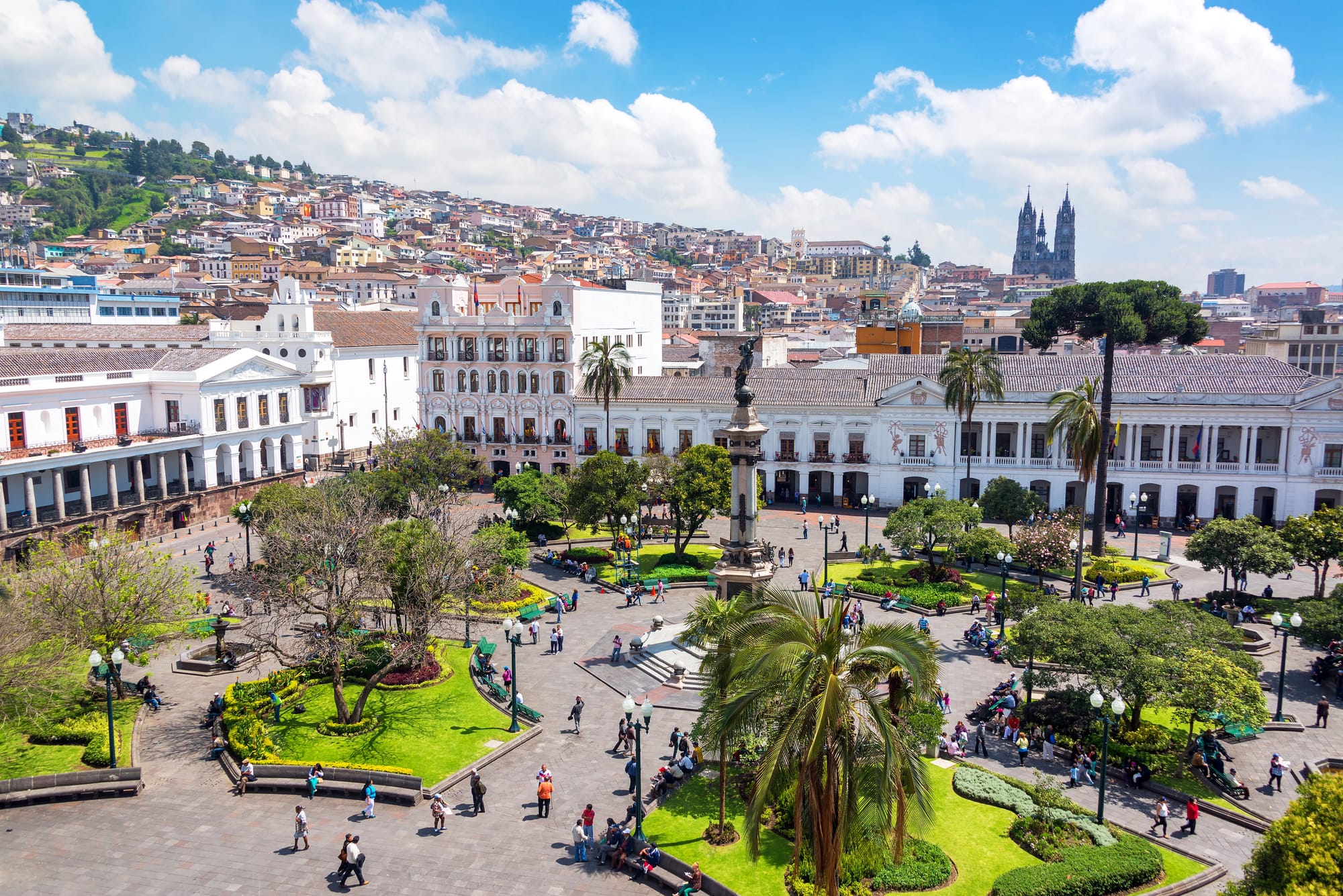
Quito sits at 2,850 metres, so the air is thin, the light is sharp, and the old town is one of the best-preserved in all of the Americas. Wander the Centro Histórico, climb the Basílica towers if your legs are feeling brave, then ride the TelefériQo cable car up the flank of a volcano for a view that shrinks the whole city to a model railway. Come for the altitude headache, stay because it's easily one of the prettiest capitals on the continent.
Baños Baños is Ecuador's adventure capital and it refuses to do anything by halves. Waterfall hikes, white-water rafting, canyoning, and a swing that flings you out over a gorge with a volcano sitting in the background like it planned the shot. When your legs finally quit, the whole town is built on natural hot springs, so you soak the day off and do it all again tomorrow. The way we would move here for the thermal baths alone.
And if you've banked extra days: Cuenca for its UNESCO-listed old town and unhurried charm, the Amazon basin around Tena or Coca for jungle lodges and river trips, and Montañita on the coast for when you want sand, surf and absolutely zero agenda.
Ready to Go?
You can absolutely organise an Ecuador trip independently, and plenty of people do. Some people find the friction of navigating international visas and logistics a nightmare - it can often be slower, more uncertain, and a lot more "emailing strangers in your second language" than anyone expects (cue our dramatic entrance).
If you'd rather land with the hard parts already sorted, Global Work & Travel runs The Real Galapagos, a volunteer trip that puts you in the islands for anywhere from 2 to 8 weeks. Your project is matched and confirmed before you fly, your accommodation and meals are organised, you're met at Quito airport, and you've got a dedicated Trip Coordinator plus 24/5 support if anything wobbles. It's open to ages 18 to 85, basic Spanish gets you going, and current dates and pricing live on the trip page.
You choose how you contribute, across three streams:
- Community and conservation: painting and repairing schools, planting trees, restoring gardens and playgrounds, and supporting local farmers.
- Teaching: helping out in classrooms with subjects like maths, English, computer skills and sport.
- Coaching: getting on the pitch to coach football to local kids and teenagers.
You'll spend your first night in a Quito homestay, then fly out to the islands, where you're either in a shared hostel in a small port village or living alongside the other volunteers in a local family home. Three meals a day, six days a week, are handled, and your weekends are entirely your own: snorkelling, diving, or just hanging out with hundred-year-old tortoises who have seen it all.
A trip like this costs more upfront than winging it solo. What you're buying is the version where you don't lose a fortnight to logistics, and you arrive in a ready-made group instead of an empty hostel.
One gap to close yourself: the trip doesn't include travel insurance, and you'll want it. Global Travel Cover is the sister brand built for exactly this, with a $0 deductible, cover you can buy and extend from anywhere, snow sports included as standard, and a 24/7 emergency line for when you're off-grid on an island.
The Galápagos has been on your list since that one documentary. Consider this your sign (yes, we know) to finally go stand next to a tortoise.
Final Thoughts
Ecuador is a small country that behaves like it has a big attitude. It hands you the Andes, the Amazon, the Pacific and the Galápagos, then keeps the cost of living low enough that you can actually afford to enjoy all of it.
The working holiday visa is one way in, if you're one of the few it's built for. A volunteer trip is another, and an easier one. A plain tourist flight and a backpack is a third. The point was never which door you walk through. The point is that you stop scrolling photos of marine iguanas and go stand next to one.
Ecuador isn't going anywhere. But the version of you that finally books it is worth catching up to.
We also publish extensive working holiday visa guides for United States, Canada, Australia, United Kingdom, Germany, France, Spain, Italy, Ireland, Norway, Korea, Argentina, Chile, Hong Kong, Estonia, Netherlands, Austria, Slovakia, Portugal, Peru, Greece, Singapore, Malaysia, Taiwan, Mongolia, Indonesia, Vietnam, Thailand, New Zealand, Chile, Ecuador, Brazil, Israel, Czech
Republic, Mongolia, Papua New Guinea, and more coming.

Jessie Chambers
Jessie is a globetrotter and storyteller behind the Global Work & Travel blog, sharing tips, tales, and insights from cities to remote escapes, informed by the collective experience and real-world knowledge of teams across our business.