




Everything you need to know about teaching English in Asia
by Jessie Chambers 12 hours ago
10 MIN READ
Picture this. It's a Friday, you've just finished your last class of the week, and your version of "the weekend" now involves a night train, a temple at sunrise, or a $2 bowl of noodles eaten on a plastic stool while a city you live in (live in!) roars around you. Maybe it's Seoul. Maybe it's a beach town in Thailand. Maybe it's a rooftop in Saigon watching the motorbikes swarm like the world's most chaotic screensaver.
This is the quiet truth about teaching English in Asia: the job is the key, but the life is the point. You're not rationing annual leave and saving up for one big trip a year. You're living somewhere extraordinary, getting paid to do something that genuinely matters, and treating the rest of the continent like your backyard.
The maths, frankly, is unfair. You teach, you save, and somehow your weekends look like other people's bucket lists. Let's talk about where.
Why Asia Is the Teaching Move
Asia is the biggest English-teaching market on earth, and it isn't close. Demand for teachers across the continent is enormous, steady, and growing, which means a native or fluent English speaker with the right paperwork has real, fundable options in a dozen different countries.
Here's the part that makes it work: in most of Asia you don't need a teaching background to start. What you need is a TESOL or TEFL certificate, the internationally recognised qualification that takes around four weeks and proves you can actually run a classroom. Pair that with the local visa, and you're employable. And because so many travellers do exactly this, you're never the only new face: there's a ready-made community of teachers in every city, swapping job leads, flat shares, and weekend plans.
Where it gets interesting is how different the experience is country to country. Some places are polished, structured, and built for saving money. Others are loose, affordable, and built for adventure. Some want a university degree on file; others will hand you a class on your TESOL alone. The whole game is matching the country to the year you actually want.
How to Choose Your Country
Three questions sort most people in about thirty seconds.
Do you have a degree? If yes, every door on this list is open to you. If no, your cleanest legal route is Cambodia, which doesn't require one. Thailand, Vietnam, Japan, and South Korea all build their teaching visas around holding a bachelor's degree, so it genuinely widens your options across the region.
What's your nationality? South Korea and Japan are the strict ones here. South Korea's teaching visa is open only to citizens of seven countries, and Japan generally wants a passport from a native-English-speaking country. Most of Southeast Asia is more flexible, welcoming native and fluent speakers from a wider range of backgrounds.
What kind of year do you want? This is the real question. Megacity structure and serious savings, or island adventure and a low cost of living? Bullet trains and four seasons, or scooters and beaches? There's no wrong answer, only the one that fits you.
What the Teaching Actually Involves
Before you pick a country, it helps to know what the work really is. For most roles you'll be teaching English to kids and teens, sometimes adults, at a public school, a private academy, or a language centre. The setting shapes your day more than the country does: public schools run on the daytime timetable with a local co-teacher in the room, while academies and language centres skew to afternoons and evenings, when students finish their regular school day.
You don't need to speak the local language to teach. Lessons run in English by design, and your job is to get students talking, not to translate. What you do need is the TESOL certificate, which trains you in lesson planning, classroom management, and the actual mechanics of teaching a language you've only ever spoken. Four weeks, and you walk in genuinely able to run a room.
Most contracts run 6 to 12 months, full-time teaching tends to land somewhere around 20 to 30 hours a week (planning on top), and your evenings and weekends are your own. That balance, real work, real income, real free time, is the whole reason teaching beats backpacking when you actually want to live somewhere instead of just passing through.
The Five Countries
South Korea
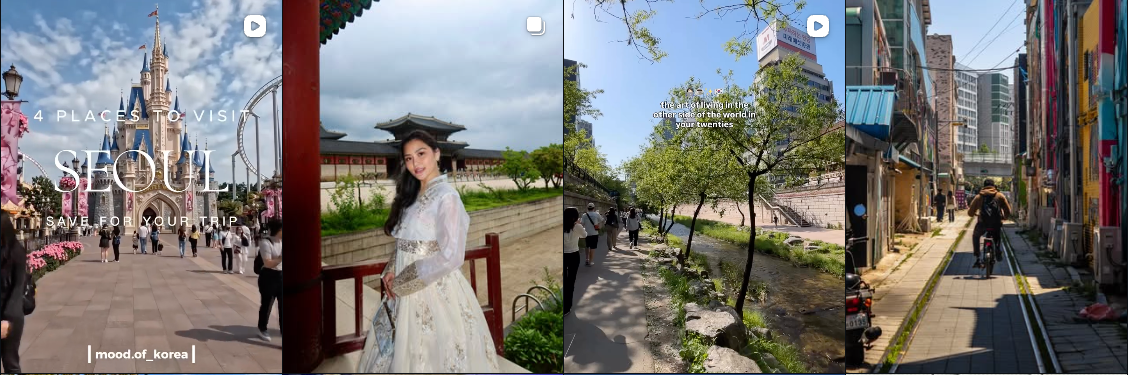
South Korea is the overachiever of the list, in the best possible way. Hyper-modern, relentlessly convenient, and somehow still full of 600-year-old palaces tucked between glass towers. You'll teach in a serious, structured school system and spend your weekends on mountain hikes that start inside the city, or eating your way through night markets that flat-out refuse to close.
It's also the savings champion. Contracts typically come with your apartment arranged, and the structure suits people who like knowing exactly where they stand. The catch is the gate: you'll need a bachelor's degree and a passport from one of seven eligible countries. Global Work & Travel runs two ways in, the in-country TESOL in Incheon where you certify alongside a cohort, or the online TESOL where you arrive already qualified and contracted. Both suit graduates who want polish, structure, and a bank balance that climbs. The trade-off is pace: Korea moves fast and expects you to keep up, but if you thrive on order and ambition, nowhere rewards it better.
Japan
Japan is the one that lives in your imagination before you ever land. Bullet trains, neon, vending machines that defy belief, and a culture that treats ancient ritual and cutting-edge tech with the same quiet seriousness. Teaching here drops you right inside it: a classroom in Nagoya by day, a centuries-old temple or a ski slope by the weekend.
Japan takes education seriously, and the standards reflect that, which is half the appeal if you want a teaching year that actually levels you up. You'll need a bachelor's degree in any field and a passport from a native-English-speaking country. Global Work & Travel's Teach in Japan experience gets your 120-hour TESOL done online before you fly, then sets you up with cultural orientation and interviews once you land. It's a 12-month commitment, open to ages 21 to 40. Curious what the day-to-day actually feels like? Their teachers have written about what it's like to teach English in Japan. Fair warning: Japanese housing and admin can be fiddly, but the structure around you is a big part of what keeps the year running smoothly.
Thailand
Thailand is the one everyone pictures, and honestly, fair. The land of smiles, street food that ruins you for all other street food, islands on tap, and a teaching scene so established you'll never feel like a lone pioneer. You teach during the week and spend your weekends on a longtail boat pretending you have somewhere to be.
It's the classic Southeast Asia base, and the most popular first stop in the region for good reason. On the paperwork: Thailand's legal teaching route, the Non-Immigrant B visa and work permit, is built around holding a bachelor's degree, so a degree is the cleanest way in (if you don't have one, talk to the team about your options before you set your heart on a country, because the rules vary by destination). Global Work & Travel's Teach in Thailand experience gets your TESOL sorted in four weeks in Hua Hin and your interviews lined up, with a shorter Teach Camps option if you want a taste rather than a full year. Want the long version of what life there looks like? One of our teachers wrote about 20 months and counting in Thailand. Just know the hiring rhythm follows the school calendar, with the biggest intakes around the start of each term, so timing your arrival matters more here than in most places.
Vietnam
Vietnam is the one that grabs you by the collar. Ho Chi Minh City is a beautiful kind of chaos, all motorbike rivers and rooftop bars and bowls of pho that cost less than a coffee back home. It's loud, fast, affordable, and absolutely buzzing, and the appetite for English here is some of the strongest in the region.
That demand is the headline: Vietnam's teaching market is booming, which makes it one of the most exciting places in Asia to land a role. You'll need a bachelor's degree in any field and a 120-hour TESOL, with your documents apostilled before you fly, so start the paperwork early. Global Work & Travel's Teach in Vietnam experience runs your orientation in Ho Chi Minh City and your TESOL in Hua Hin, then helps line up your teaching role, open to ages 21 to 55. If you want energy, opportunity, and a city that never quite powers down, this is your one. Heads up that Vietnam tightened its document rules recently, so the apostille-everything-early advice goes double here.
Cambodia
Cambodia is the quiet plot twist. Overshadowed by its flashier neighbours and all the better for it, it's warm, raw, ridiculously friendly, and home to some of the most jaw-dropping temples on the planet. Angkor Wat at sunrise is a normal weekend here. Let that sit for a second.
Here's Cambodia's superpower: it's one of the only countries in Asia where you can teach legally without a bachelor's degree. The work permit runs through a business visa your school helps arrange, and a strong 120-hour TESOL plus fluent English is your ticket in. That makes it the obvious starting point for non-degree holders and career-changers. Global Work & Travel's Teach in Cambodia experience certifies you in Hua Hin, Thailand, then places you across the border in Cambodia, so it's two countries in one trip, open to ages 20 to 40 for anywhere from 1 to 24 months. If you want genuine adventure and the lowest barrier to entry on this list, you've found it. Pay sits lower than its neighbours, but so does the cost of living, and the country runs largely on US dollars, which quietly protects whatever you manage to save.
Can You Actually Save Money?
Short answer: in most of Asia, yes, and it catches people off guard. The trick isn't a giant salary, it's the gap between what you earn locally and what life actually costs. Across these countries, rent is low or covered, the food is cheap and ridiculously good, and public transport costs a fraction of what you're used to.
The structured-savings countries, South Korea and Japan, pair solid pay with perks like arranged housing, which is why people there often finish the year with a genuine cushion. The Southeast Asia trio of Thailand, Vietnam, and Cambodia generally pay less, but the cost of living drops even further, so your money still stretches into a shape it never could back home. Either way the maths tends to work in your favour, as long as you're not trying to live like a holidaying tourist every single weekend.
The Reality Check
Teaching in Asia is one of the most accessible ways to live abroad, but it pays to go in clear-eyed.
The paperwork is the real hurdle, not the teaching. Apostilling a degree and getting a criminal background check legalised can take six to twelve weeks, and in some countries a single missing stamp pushes your start date back an entire intake. Whatever country you pick, start your documents early.
The job varies hugely, even within one country. Public schools tend to be structured and predictable, while private academies and language centres range from excellent to chaotic, with the occasional one that plays loose with contracts. Read every contract closely, and look hard at teaching hours, housing, and notice periods.
And the honest one: if you don't have a degree, your options genuinely narrow. Cambodia is the cleanest no-degree route in the region, and a few countries have limited or higher-risk pathways, but a degree is what truly opens Asia up. The first month anywhere is an adjustment. Classroom culture in particular will catch you off guard: what counts as polite, how students show respect, how feedback gets given, all of it shifts the moment you cross a border. Curiosity is the most useful thing you can pack. Most people settle by week six, and very few regret going.
What's Sorted When You Go With Global Work & Travel
You can organise a teaching year in Asia entirely on your own. People do it every year, and it works. It's also slower, more paperwork-heavy, and a lot less forgiving of a wrong step when you're doing it solo from the other side of the world.
The shared model across Global Work & Travel's teach experiences is built to take the friction off the front end. Every option includes your internationally recognised 120-hour TESOL certification, job-matching support so you're interviewing for real roles, a dedicated Trip Coordinator to walk you through the visa, cultural activities to settle you in, and 24/5 team support once you're on the ground.
A couple of honest notes. These experiences cost more upfront than going it alone; what you're paying for is speed, a paperwork safety net, and a cohort to land into. And most teach trips don't include travel insurance (South Korea's includes medical cover inside the country). For the gaps, the weekend hop to a neighbouring country, the lost bag, the pre-departure what-ifs, Global Travel Cover is the sister-brand policy built to fill them, with a 24/7 emergency line and snow sports covered as standard.
Ready to Go?
If you'd rather arrive with the setup already in motion, here's where each year begins:
- Teach in South Korea: structured megacity life and serious savings, for graduates from eligible countries.
- Teach in Japan: the tradition-meets-neon dream, online TESOL then a 12-month placement.
- Teach in Thailand: the classic Southeast Asia base, TESOL in four weeks and islands on tap.
- Teach in Vietnam: high demand, big-city energy, one of the region's most exciting markets.
- Teach in Cambodia: the no-degree-required adventure, with two countries in one trip.
Not sure which is yours yet? The full teach abroad hub lays them all out side by side. Pick the year that sounds like you, and let the paperwork be someone else's problem for once.

The Only Hard Part Is Deciding
You'll land in one of these countries unable to read a single sign, slightly terrified, definitely jet-lagged. And somewhere around month three it clicks. You've got a favourite noodle spot, a class that lights up when you walk in, a group chat of teachers from six different countries, and a passport filling up faster than you can explain to people back home.
A year teaching in Asia doesn't just look good on a CV. It rewrites what you think a life can look like. The teaching was never the hard part. Deciding to go is.

Jessie Chambers
Jessie is a globetrotter and storyteller behind the Global Work & Travel blog, sharing tips, tales, and insights from cities to remote escapes, informed by the collective experience and real-world knowledge of teams across our business.