



How To Study Abroad In Australia (2026)
by Jessie Chambers 2 years ago
11 MIN READ
This article was reviewed and updated for accuracy on January 20th 2026.
Australia has become one of the most popular study destinations in the world, and honestly? It's not hard to see why. You've got world-class universities, beaches that look fake they're so beautiful, cities that actually function properly, and a lifestyle that makes grinding through lectures slightly more bearable when you can surf before your 9 a.m. tutorial.
Whether you're interested in advancing your English, studying science, business, law, or just want an excuse to live somewhere warm for a few years, Australia offers excellent education with a side of actual quality of life.
Planning to study abroad in Australia involves a fair bit of admin. Choosing the right university, securing a student visa, managing your finances, figuring out accommodation. It's doable, but it requires preparation. This guide walks you through everything you need to know about studying in Australia, including how to boost your CV with real work experience through internships whilst you're there.

Why Study in Australia? (aside from the guaranteed good vibes)
Before we dive into the logistics, let's talk about why so many international students choose Australia over other English-speaking countries.
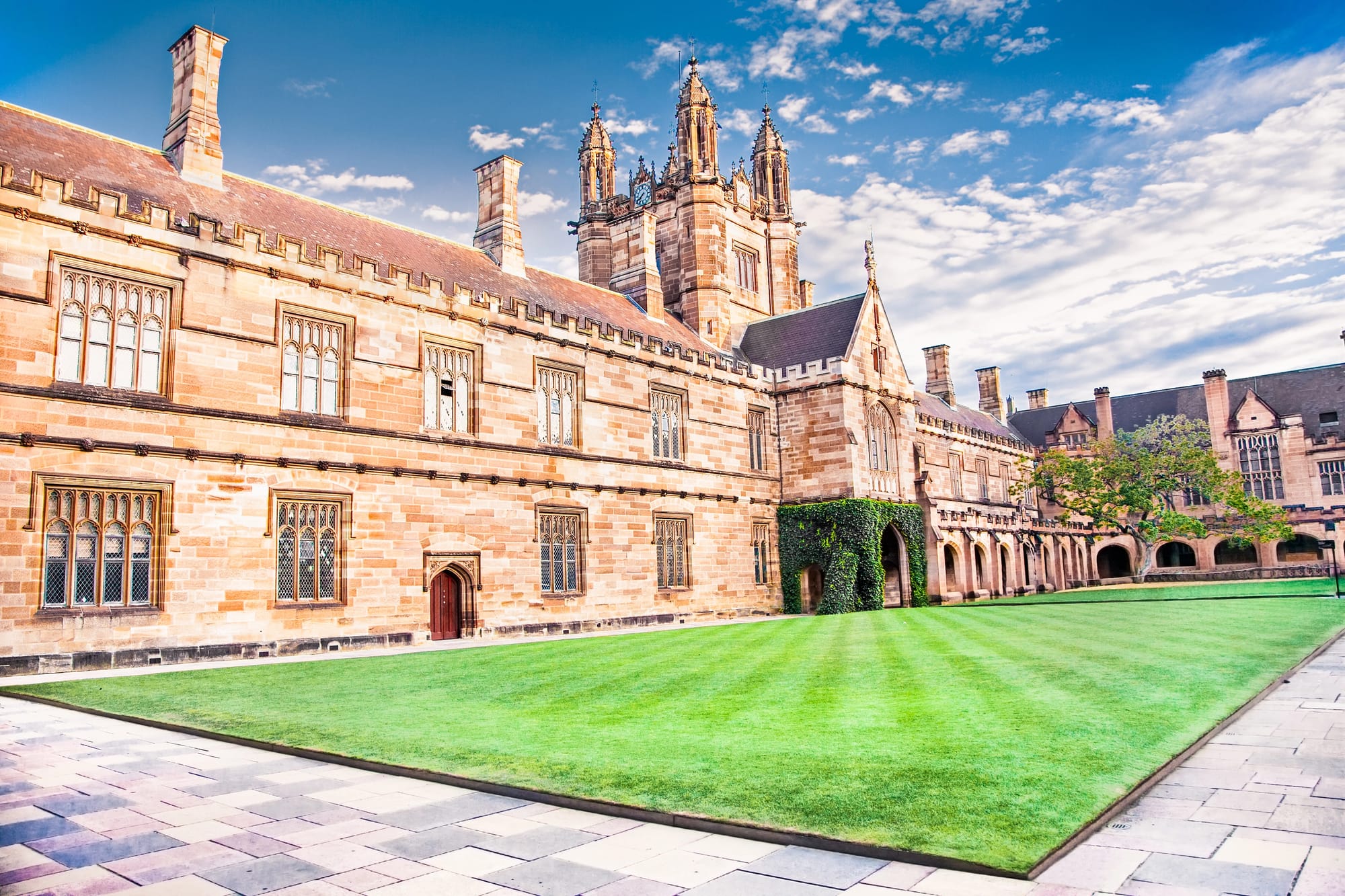
World-Class Universities Australia is home to some genuinely excellent universities. The University of Sydney, University of Melbourne, Australian National University, University of Queensland, Monash University. These institutions are globally recognised, research-focused, and offer strong programmes across science, business, engineering, law, health, and the arts. Your degree will actually mean something when you graduate.
You'll Actually Improve Your English If you want to become fluent in English, living in an English-speaking country is the fastest way to do it. You'll be forced to speak, read, write, and think in English every single day. Apps can only get you so far. Immersion works.
Multicultural Cities Australia's major cities (Sydney, Melbourne, Brisbane, Perth) are incredibly diverse. You'll meet people from all over the world, experience different cultures, try food you've never heard of, and build a genuinely international network. It's not just marketing fluff. The diversity is real.
The Lifestyle Is Genuinely Good Australia is famous for its outdoor lifestyle. Beaches, national parks, hiking, surfing, wildlife. Beyond academics, you'll actually have a life outside the library. Work-life balance exists here in a way it doesn't in places like London or New York.
Post-Study Work Visa Options Australia offers post-study work visas (Temporary Graduate visa, subclass 485) that let you stay and work in Australia after you graduate. Depending on your degree level and field, you could get 2 to 3 years of work rights depending on your
Qualifications, with the exception that Hong Kong and British National Overseas passport holders may stay for 5 years. That's huge if you want to build international work experience or transition into a full career in Australia.
Understanding the Costs (Because Nobody Likes Surprises)
Let's be honest: studying in Australia is expensive. But it's worth knowing exactly what you're signing up for so you can budget properly.
Tuition Fees:
- Undergraduate degrees: AUD $20,000 to $45,000 (roughly £11,000 to £25,000) per year, depending on your course and university
- Postgraduate degrees: AUD $22,000 to $50,000 (roughly £12,000 to £28,000) per year
STEM courses, medicine, and law tend to be at the higher end. Arts and humanities are usually cheaper.
Cost of Living:
- Sydney and Melbourne: AUD $1,500 to $2,500 (£850 to £1,400) per month for rent, food, transport, and general living expenses
- Brisbane, Adelaide, Perth: AUD $1,200 to $1,800 (£680 to £1,000) per month
Additional Costs:
- Overseas Student Health Cover (OSHC): Around AUD $500 to $700 (£280 to £390) per year (mandatory for your visa)
- Textbooks and course materials: Budget a few hundred dollars per semester
- Weekend trips and social life: Australia is big. You'll want to explore. Budget accordingly.
Real Talk: Yes, it's expensive. But when you factor in the quality of education, the post-study work visa, and the lifestyle, many students find it worth the investment. Just don't show up thinking you can wing the budget. Plan properly.
Step 1: Choose Your University and Degree
Australia offers a wide variety of institutions, from large public research universities to smaller private universities and specialised schools.
Public Universities: The big names like University of Sydney, University of Melbourne, University of Queensland, Monash University, and Australian National University are known for strong research output and academic rigour. They offer a huge range of undergraduate and postgraduate programmes across pretty much every field you can think of.
Private Universities: Universities like Bond University offer smaller class sizes and more individualised support, though tuition fees tend to be higher.
Specialised Institutions: If you're studying a niche field, Australia has specialised schools like the National Institute of Dramatic Art (NIDA) for performing arts or the Australian Film Television and Radio School (AFTRS) for media studies.
All courses are taught in English, so if you're worried about language barriers, don't be. However, if you want to improve your English before starting your degree, many universities offer English language programmes to get you up to speed.
Apply for a Student Visa (Subclass 500)
Once you've been accepted into a university, you'll need to apply for a student visa. Here's what you need:
Confirmation of Enrolment (CoE): Your university will send you this once you've accepted your place and paid your deposit. You need it to apply for your visa.
Proof of Financial Capacity: You'll need to prove you have enough money to cover your tuition fees and living expenses for the duration of your stay. The Australian government sets minimum amounts, so check the current requirements.
Overseas Student Health Cover (OSHC): All international students must have health insurance for the entire duration of their studies. You'll need proof of OSHC when you apply for your visa.
Application Process: Submit your visa application online via the Australian Department of Home Affairs. Apply at least three months in advance to allow for processing time. Visa processing can take a while, so don't leave it to the last minute.
Boost Your CV with an Internship in Australia
Here's something most students don't realise until it's too late: having an Australian degree is great, but having an Australian degree plus real Australian work experience is significantly better.
If you're serious about building a career (either in Australia or internationally), doing an internship whilst you're studying or immediately after you graduate is one of the smartest moves you can make. It gives you practical skills, Australian workplace experience, professional references, and a genuine edge when you're applying for jobs later.
Why Internships Matter:
Australian employers love candidates with local work experience. If you graduate with just a degree and no work experience, you're competing with every other graduate. If you graduate with a degree and a solid internship on your CV, you're ahead of the pack.
Internships also help you:
- Build a professional network in Australia
- Understand Australian workplace culture
- Test out industries and roles before committing to a full-time career path
- Potentially convert your internship into a full-time job offer
What's Included Across Our Internship Trips
When you book an internship in Australia with Global Work & Travel, here's what we sort for you:
- Structured internship placement – We do the hard work of finding you a valuable placement within your desired industry and arranging your interviews
- Accommodation support – Our in-country team helps you find comfortable accommodation close to your internship placement
- Dedicated Trip Coordinator – Real human support from booking to departure, guiding you through the entire process
- Visa guidance – Step-by-step help with your visa application (we don't issue visas, but we make the process significantly less confusing)
- CV/resume assistance – We help you tailor your CV to Australian employers so you're not sending out something that’s half chop
- Ongoing local team support – Access to our team in Australia throughout your internship
- Certificate of completion – Official recognition of your internship experience for your CV
- Host company reference – A reference from your Australian employer (gold for future job applications)
Some trips also include:
- Dedicated mentor – A personal industry expert for 1:1 training, performance reviews, and consistent feedback (particularly in Marketing internships)
- Airport transfer – Driver picks you up when you land
- First few nights of accommodation – Gives you time to settle in before finding permanent accommodation
- Welcome orientation – Get oriented to Australian life and your internship expectations
The specifics vary slightly depending on the internship type, but the core support is consistent: we get you there, get you set up, and make sure you're not figuring it all out alone.
Internships We Offer in Australia
Marketing Internship in Australia
Work with Australian marketing agencies or in-house marketing teams, gaining experience in digital marketing, social media, content creation, campaign management, and analytics. Australia's marketing scene is creative, fast-paced, and genuinely impressive. You'll leave with a portfolio and contacts that actually matter.
Gain legal work experience in Australian law firms, corporate legal departments, or community legal centres. Perfect for law students or recent graduates looking to understand how the Australian legal system works in practice. Common law, but with an Australian twist. You'll gain exposure to real casework, legal research, and client interactions.
Finance Internship in Australia
Work in Australian finance firms, banks, or corporate finance departments. Build your CV with experience in financial analysis, accounting, investment, or corporate finance. Australia's financial sector is strong, competitive, and well-regulated. This is proper hands-on experience, not just coffee runs.
Australia's tech industry is booming, especially in Sydney and Melbourne. Gain hands-on experience in software development, IT support, cybersecurity, data analysis, or tech project management. You'll work with actual tech companies, build real projects, and leave with experience that employers actually care about.
Graphic Design Internship in Australia
Work with Australian design studios, creative agencies, or in-house design teams. Build your portfolio with real client work whilst gaining industry experience. Australia's design scene is vibrant, innovative, and genuinely competitive. You'll leave with work you can actually show potential employers.
Marine Conservation Internship in Australia
If you're studying environmental science, marine biology, or conservation, this is a game-changer. Work on real conservation projects along Australia's coastline, including the Great Barrier Reef. Hands-on fieldwork, research experience, and a CV that stands out. This isn't just an internship. It's the kind of experience that changes career trajectories.
General Internship in Australia
If your field isn't listed above, we also help place students in internships across other industries including hospitality, tourism, event management, media, and more. The process is the same: we find you a placement, sort your interviews, and support you throughout.
How It Works
We connect you with Australian employers looking for interns, help you with your CV and interview prep, and provide ongoing support throughout your internship. You focus on the work. We handle the logistics, the visa guidance, the accommodation hunt, and all the admin chaos that comes with moving to a different country for work.
When Should You Do an Internship?
- During your degree (summer breaks, semester breaks)
- After you graduate (using your post-study work visa if you've been studying in Australia, or a Working Holiday Visa if you're eligible)
- Before you start your degree (if you're taking a gap year or want industry experience first)
Real Talk: Internships in Australia are competitive. Showing up with just enthusiasm won't cut it. You need a solid CV, a clear idea of what you want to learn, and the flexibility to adapt to Australian workplace culture (which is more relaxed than the UK or US, but still professional). We'll help you get there, but you've got to show up ready to work.
Top Places to Visit While You're in Australia
You're in Australia to study, but let's be honest: you're also here to explore. Australia is massive, ridiculously beautiful, and packed with places that'll make your mates back home genuinely jealous. Here's where to go when you're not working.
Sydney: Obviously. The Opera House, Bondi Beach, harbour views that look fake they're so perfect. Sydney is expensive, touristy, and absolutely worth it. Go for a weekend, do the coastal walk from Bondi to Coogee, eat overpriced brunch, and call it research.
Melbourne: The coffee capital of Australia (possibly the world, don't @ us). Laneways, street art, live music, food that'll ruin you for other cities. Melbourne is where creatives and students actually want to live, and the vibe backs it up.
Great Barrier Reef: If you're in Australia and you don't visit the Great Barrier Reef, did you even go? Cairns and Port Douglas are the main access points. Snorkelling or diving here isn't just ticking a box. It's genuinely one of the most incredible things you'll ever see.
Byron Bay: Hippie beach town, backpacker central, surf culture, ridiculously good vibes. It's touristy, it's expensive for what it is, and you'll love it anyway. Go for the weekend, meet other travellers, leave with sand in everything you own.
Tasmania: Underrated, stunning, and way cheaper than mainland Australia. Cradle Mountain, Freycinet National Park, Hobart's food scene. If you want nature without the crowds, Tasmania delivers.
Blue Mountains: Two hours from Sydney, stunning hiking, waterfalls, and views that make you understand why people won't shut up about Australia's natural beauty. Perfect for a day trip or weekend escape.
Uluru (Ayers Rock): The massive red rock in the middle of nowhere that somehow feels spiritual even if you're not the spiritual type. It's remote, it's expensive to get to, but it's one of those once-in-a-lifetime things.
Want to Hit Multiple Spots in One Go?
If you've got 10 days and you want to see the best of Queensland's East Coast without planning every single detail yourself, our Brisbane to Cairns Experience tour is the move. You'll hit K'gari (Fraser Island), the Whitsunday Islands, Whitehaven Beach, the Great Barrier Reef, and Cairns, all whilst travelling with other young travellers (ages 18 to 39). Transport is sorted (yacht, train, truck, ferry, the lot), accommodation is included (hostels, cabins, and sleeping on a yacht), and you'll get experiences like snorkelling, canoeing the Noosa Everglades, and sailing the Whitsundays. It's ten days of Australia's greatest hits without the stress of organising it yourself.
Australia's got everything: beaches, reefs, rainforests, deserts, mountains, and cities that actually function. Use your weekends (and internship breaks) wisely.
Final Thoughts
Studying in Australia is expensive. There's no way around that. But when you actually break down what you're getting (world-class education, post-study work visa options, a lifestyle that doesn't make you want to cry every winter, and the chance to build real work experience through internships), it starts looking less like an expense and more like an investment.
Most students who come to Australia for their degree end up wishing they'd planned to stay longer. The education is solid, the cities are genuinely liveable, and the opportunities (especially if you're strategic about internships and networking) can set you up for a career that extends well beyond graduation.
If you're serious about studying in Australia, start planning early. Get your finances sorted, research your visa requirements, pick a university that actually aligns with your career goals, and think about how you'll gain work experience whilst you're there. Showing up unprepared means spending your first few months stressed and scrambling instead of actually enjoying the experience.
Australia's waiting. The beaches, the universities, the career opportunities, the kind of student life that doesn't involve surviving on instant noodles in a freezing flat. Let us help you do the prep work now, and you'll land ready to make the most of it.

If you want to learn about the digital nomad visa's for other countries, we have extensive guides for countries like the United Kingdom, Germany, New Zealand, Italy, Portugal, Spain, Thailand, and Japan.
We also publish extensive working holiday visa guides for United States, Canada, Australia, United Kingdom, Germany, France, Spain, Italy, Ireland, Korea, Argentina, Chile, Hong Kong, Estonia, Netherlands, Austria, Slovakia, Portugal, Peru, Greece, Singapore, Malaysia, Taiwan, Mongolia, New Zealand, Ecuador, Brazil and more coming.

Jessie Chambers
Jessie is a globetrotter and storyteller behind the Global Work & Travel blog, sharing tips, tales, and insights from cities to remote escapes, informed by the collective experience and real-world knowledge of teams across our business.