



Thailand Digital Nomad Visa - The Complete Guide For 2027
by Jessie Chambers a year ago
10 MIN READ
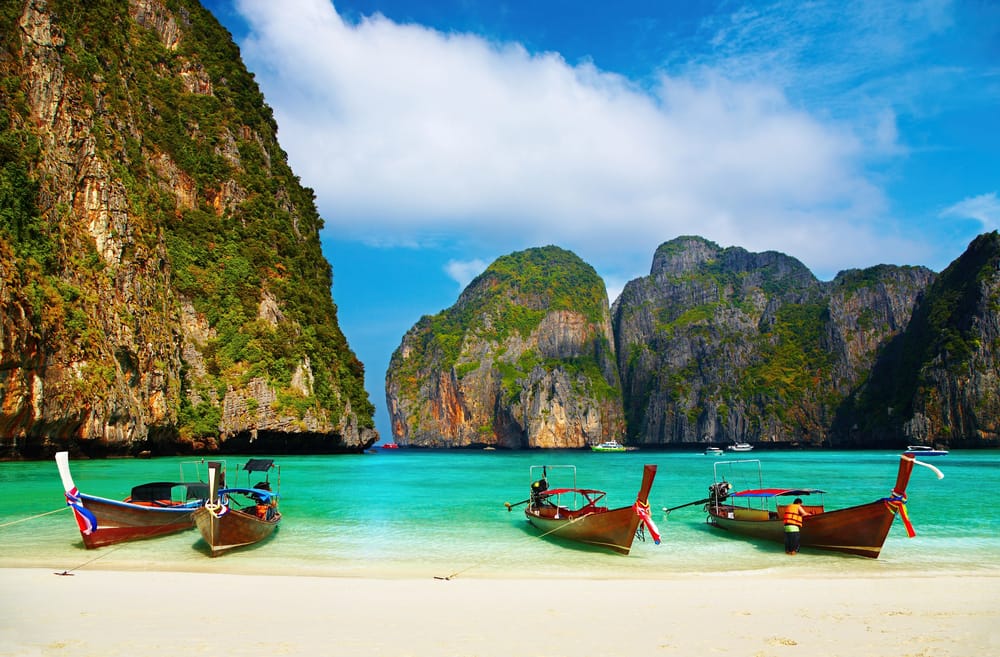
You've seen the photo. Laptop on a beach towel, turquoise water, someone allegedly working. That photo is a lie. Sand gets in everything, you cannot see a screen in direct sun, and the wifi on most beaches is theoretical at best. Like, let’s level, who is actually getting anything done in this environment that is productive.
Let us serve the real, and much better version: You wake up in Chiang Mai, walk five minutes to a cafe with air conditioning and actual fast flying internet, and work a full morning for the cost of a coffee. You eat lunch for under two pounds. You finish at four and ride to a waterfall. Your rent for a decent one-bedroom is what a room in a shared flat costs back home.
Thailand has quietly become the best-value long-stay option for remote workers anywhere, and from 2024 there's finally a visa built for it.

Why Thailand, Specifically
Plenty of countries are cheap. Fewer are cheap and set up for this.
- The infrastructure already exists: Thailand has had remote workers for over a decade, which means coworking spaces, lush internet, month-to-month furnished rentals and cafes that expect you to stay. You're not pioneering anything, and that's the point.
- You're two hours from everywhere: Vietnam, Cambodia, Malaysia, Indonesia and Singapore are all short, cheap flights. A long weekend somewhere genuinely different costs less than a night out at home.
- The healthcare is proper good: Thai private hospitals are a big reason people stay long-term rather than treating this as a gap year. Fast, competent and a fraction of what the equivalent costs in the US or Australia.
- The community turns over constantly: which sounds like a downside and isn't. In Chiang Mai or on Koh Phangan, arriving alone is normal and everyone else arrives alone too. You'll have people within a week.
- And the food: we're not going to be normal about this. A bowl of noodles from a cart at 11pm, cooked by someone who has made only that dish for twenty years, will recalibrate what you think street food means.
The trade-off is heat, humidity and a rainy season that means it. Some people never adjust. Most stop noticing by week three. In our opinion, lean into the frizzy hair, humid, dewy skin lyfe - it’s giving “I’m on perm vacay”.
The Honest Position
Thailand doesn't have anything officially called a digital nomad visa. What it has is the Destination Thailand Visa, known as the DTV, which launched in July 2024 and does exactly the job that name implies.
Five years of validity. Multiple entry. Up to 180 days each time you arrive, extendable once. It's more generous than almost any comparable visa in the region, and the requirements are reachable for a lot of people who assumed this sort of thing was out of reach.
There's also the Long-Term Resident visa for a very different kind of applicant, covered further down. That’s if you genuinely fall in love with the coconut life - I mean, kinda hard not to, right?
Destination Thailand Visa at a Glance
- Validity: 5 years, multiple entry
- Stay per entry: up to 180 days, with one extension of up to 180 days available in-country
- Fee: 10,000 THB as standard, though embassies charge varying local equivalents
- Money required: 500,000 THB in savings, typically held for around three months before you apply
- Who it's for: remote workers and freelancers with foreign income, people doing qualifying Thai cultural activities, and their dependants
- What it is not: a work permit. You cannot work for Thai employers or take on Thai clients
- Where you apply: the Thailand e-Visa portal, from outside Thailand
- Processing: usually two to four weeks
What the DTV Actually Covers
The visa runs three categories, and knowing which one you're applying under shapes your entire document set.
- Workcation: the one most readers want. Remote employees of foreign companies, freelancers and self-employed professionals whose income comes from outside Thailand
- Thai Soft Power: for people coming to do qualifying cultural activities. Muay Thai training, Thai culinary courses, medical treatment, sports training, seminars and art events all count. General language courses do not, and activities usually need to run at least six months to support an application
- Dependent: your legal spouse and children under 20 can be included
On the money. The 500,000 THB requirement is savings, not income, and this trips people up constantly. Most embassies want bank statements showing that balance maintained for around three months before you apply, and some ask for six months of history. Parking the money for a week no longer works. Cryptocurrency holdings and investment account statements are not accepted, so the funds need to sit in a normal personal bank account.
On what you'll need to prove. For the Workcation route that means an employment contract or evidence of freelance work, a professional portfolio establishing you actually do the thing you claim, and often company registration documents for your employer. For Soft Power it means an acceptance letter from the school, gym or institution.
On what the visa doesn't do. The DTV is emphatically not a work permit. Your income has to come from outside Thailand. Picking up local clients or taking a job with a Thai company is not permitted on it, and that boundary is taken seriously.
The 180-Day Question
Every entry gives you up to 180 days. You can then apply once at a Thai immigration office to extend by up to another 180, which gets you close to a full year in-country before you need to leave and come back.
The honest caveat: extensions are inconsistent. Immigration offices vary in what they want and how they interpret the rules, some applicants report being asked to produce the entire original document set again including the 500,000 THB proof, and approvals are far from automatic. Plenty of people find a short trip to Vietnam or Malaysia and a fresh entry easier than fighting for the extension.
Plan around the border hop being the likely path, and treat a successful extension as a bonus rather than the plan.

The Long-Term Resident Visa
Different visa, different applicant entirely.
The LTR runs up to ten years and is aimed at high earners, wealthy pensioners, investors and highly skilled professionals, with a work-from-Thailand category for remote employees of established foreign companies. The income thresholds sit far above the DTV, in the region of USD 80,000 a year for the remote-worker category, with additional requirements around your employer's size and revenue.
It also comes with genuine benefits the DTV lacks, including a path to a work permit and various tax provisions. If your income clears that bar, it's worth investigating properly through the Board of Investment, since the criteria are detailed and change periodically.
For most freelancers and remote workers, the DTV is the realistic option and the better one.
Other Routes You'll See Mentioned
The DTV made most of these redundant for remote workers, but they come up constantly in forums, so it's worth knowing where they sit.
- Visa exemption on arrival: many nationalities get a stamp on landing with no application at all, currently up to 60 days for a lot of passports, with an extension usually possible. Fine for testing the water, useless as a way to live somewhere, and the days count toward tax residency just the same. Terms change, so check before you fly
- Education visa: the long-standing workaround, where people enrolled in a Thai language course to get a longer stay. Still legitimate if you genuinely want to learn Thai, but scrutiny has increased and it's a lot of hoops for something the DTV now does better
- Thailand Privilege: a paid membership giving multi-year entry and concierge services. It works, and it costs what you'd expect for what it is. Aimed at people who want the access without the paperwork
For most freelancers and remote employees, none of these beat the DTV on flexibility, cost or length.
How to Apply
- Confirm your category. Workcation, Soft Power or Dependent. Your document list flows from this
- Get the money in place early. The balance needs history behind it. If you're starting from zero on this, you're three months away from being able to apply, not three days
- Assemble your evidence. Passport valid at least six months, passport photo, bank statements, and the proof of purpose for your category, which means employment or freelance documentation and a portfolio for Workcation, or an acceptance letter for Soft Power
- Apply through the e-Visa portal. Applications are submitted online from outside Thailand. You cannot apply from inside the country
- Wait two to four weeks. Longer at busy embassies, so don't book flights against the shortest estimate
- Report every 90 days once you're there. If you stay continuously, 90-day reporting applies like any long-stay visa
Requirements are interpreted differently by different Thai embassies, and the same application can go smoothly in one place and stall in another. Check the specific checklist of the embassy handling yours rather than a generic list, including this one.
The Reality Check
The 180-day tax line is the thing nobody mentions. Spend more than 180 days in Thailand in a tax year and you are generally considered tax resident there, which has real consequences depending on your nationality and where your income arises. Get advice before you cross that threshold rather than after.
Internet quality varies enormously. Bangkok and Chiang Mai are excellent. Island connections range from fine to genuinely frustrating, and if your work involves video calls you'll want to check specific accommodation rather than trusting the island's reputation.
Healthcare is good and affordable, but not free, and Thailand has one of the world's higher road accident rates. Insurance isn't required for the DTV. Get it anyway, especially if a scooter is anywhere in your plans, which it will be.
And the low cost of living is real but not infinite. Bangkok and Phuket have moved considerably upmarket, and the version of Thailand that costs almost nothing is further from the tourist centres than the internet suggests.
Where to Actually Base Yourself
Chiang Mai
Still the capital of this whole thing, and for good reason. Nimmanhaemin, universally shortened to Nimman, is the neighbourhood: café after café built for people with laptops, coworking spaces on every block, and a community that turns over constantly so it's easy to arrive knowing nobody.
Punspace and Yellow are the established coworking names. The Old City within the moat is prettier and cheaper to live in. Sunday's walking street market is the ritual. And when the city gets much smaller than you want, the mountains start immediately.
One caveat with dates: burning season runs roughly February through April and the air quality gets genuinely bad. Plan your year around it.
Bangkok
Chaotic, enormous, and far more liveable than a short visit suggests. Ari is where people who live here actually settle: leafy, full of independent cafés, on the BTS line and noticeably cheaper than the expat centre. Thonglor and Ekkamai are the polished version, Sukhumvit the convenient one.
The Hive has multiple locations for coworking. The transport is excellent and air-conditioned. The food, from a street cart at midnight to whatever you can afford at the top end, is one of the great arguments for being alive.
Bangkok rewards the people who stay long enough to stop finding it overwhelming.
Koh Lanta
The island people choose when they want to actually get work done. Quieter than Phangan, far less developed than Phuket, with long flat beaches and a road you can ride end to end.
KoHub is the coworking space that put Lanta on the nomad map, and the community around it is unusually tight because the island is small. High season runs November to April. In low season a lot of the island closes and the ferries thin out, which suits some people enormously.
Koh Phangan
Yes, the full moon party island. Also, entirely separately, one of the better places in Asia to live for a few months.
The party happens at Haad Rin in the south. The rest of the island barely notices. Srithanu in the northwest is the wellness and remote-work end, yoga studios and vegan cafés and a permanent community of people who came for a month years ago. Beachub is the coworking anchor.
The infrastructure is patchier than the mainland and the ferry is part of your life now. Worth it.
Phuket
The one people are snobby about, usually without having lived there. Patong is genuinely not for you, and everyone who lives on Phuket agrees. The rest of the island is a different proposition entirely.
Rawai and Nai Harn in the south are where the long-stayers are: quieter beaches, a proper local food scene, gyms and coworking, and a community that skews toward people running businesses rather than passing through. Bang Tao in the northwest is the polished, more expensive version.
What Phuket has over the other islands is an international airport, which changes the maths completely. Direct flights across Asia, no ferry, and you can leave for a border run in the morning and be back by dinner. It's more expensive than Lanta or Phangan, and for some people the convenience earns it.
Trips Worth Knowing About
If you'd rather see the country properly before deciding where to base yourself, or you want a run at it with a group rather than solo:
- Teach in Thailand: a different path entirely, with a 120-hour TESOL course over four weeks, accommodation during the course, and job-matching support afterwards. Worth a look if the DTV's foreign-income requirement doesn't fit your situation
Before You Commit
The DTV is the most generous thing Thailand has offered remote workers, and the requirements are more reachable than most people assume. The two things that decide whether your application works are getting the savings history in place early and preparing evidence for the right category.
Insurance isn't a DTV requirement, which is precisely why people skip it and then regret it. Global Travel Cover covers the gap: $0 deductible, buy and renew from anywhere, and a 24/7 emergency line, which matters more in a country where the nearest good hospital might be a ferry away.
And if the visa route isn't your situation at all, Global Work & Travel runs trips across a range of destinations where the visa support, accommodation and job matching are sorted before you land. You pay more for that than you would going it alone. What you're buying is not having to build everything from nothing in week one.

Final Thoughts
Five years is a long runway. Long enough to stop being a visitor, learn where the good noodle place is, work out which island suits your actual personality rather than your holiday one, and build a life that happens to be located somewhere warm.
The people who get the most out of this aren't the ones chasing the beach photo. They're the ones who found a routine that works, in a country where the routine costs a fraction of what it did at home, and then used the difference to go and see things.
Get the savings sorted. Everything after that is logistics.
We also publish extensive working holiday visa guides for United States, Canada, Australia, United Kingdom, Germany, France, Spain, Italy, Ireland, Norway, Korea, Argentina, Chile, Hong Kong, Estonia, Netherlands, Austria, Slovakia, Portugal, Peru, Greece, Singapore, Malaysia, Taiwan, Mongolia, Indonesia, Vietnam, Thailand, New Zealand, Chile, Ecuador, Brazil, Israel, Czech
Republic, Mongolia, Papua New Guinea, and more coming.

Jessie Chambers
Jessie is a globetrotter and storyteller behind the Global Work & Travel blog, sharing tips, tales, and insights from cities to remote escapes, informed by the collective experience and real-world knowledge of teams across our business.