



Papua New Guinea Working Holiday Visa Guide For 2026
by Jessie Chambers a year ago
10 MIN READ
Picture a country with over 800 languages, where the reef drops straight off into WWII wrecks, where you can trek a rainforest ridge that changed the course of a war, and where "remote" means genuinely, properly remote. That's Papua New Guinea, Australia's nearest neighbour and somehow one of the least-travelled places on earth. It's raw, it's staggering, and it does not do things the easy way.
Which brings us to the honest bit, and we're getting it out early because the internet won't. If you've been searching "Papua New Guinea working holiday visa", you've probably been told it exists. It doesn't. Not the way Australia, Canada or Japan run theirs. PNG has no youth-mobility scheme, no one-year work-and-travel permit, no "rock up at 25 and figure it out" route. What it has instead is narrower and more specific, and knowing the difference before you plan a year around it saves you a world of pain. So let's walk through what's actually true.
Let's Clear One Thing Up: There's No PNG Working Holiday Visa
Straight up: Papua New Guinea does not offer a working holiday visa. We know pages sell you one. We know the search results sound confident about it. The confidence is misplaced.
PNG's immigration authority, the Immigration and Citizenship Services Authority, runs a small, specific set of visa classes. For work there are three: an Employment Visa, a Restricted Employment Visa for specialist skills not available locally, and a Journalist Visa. Every one of them is employer-sponsored and tied to a work permit. There is no category anywhere in the system for a young traveller who wants to arrive, look around, and pick up casual work to fund the trip. That's the entire idea of a working holiday visa, and PNG simply doesn't have it.
So where does the myth come from? Most likely the arrangement running the other way. As of late 2025, PNG citizens became eligible for Australia's Work and Holiday visa, so young Papua New Guineans can now do a working holiday down here. That part is real. It just points in the opposite direction to what most people mean when they type "PNG working holiday visa", and mixing the two up is where the confusion begins.
None of this puts PNG off-limits. It just means you go in with the right map. You can absolutely visit, travel, dive, trek and be changed by the place. You can work here too, but only through one specific door. Here's how both actually function.

So How Do You Actually Get In?
For the vast majority of travellers, PNG is a visit-first destination. You come on a visitor visa, you explore, and you leave when it's up. Simple enough, as long as you sort it before you fly.
For Australians specifically, and this one catches people out, you cannot get a visa on arrival. The Australian government's own advice is clear that Australians must hold a visa before boarding. You apply online through PNG's official eVisa portal for a Visitor Visa, issued as a single-entry stay of up to 60 days. You'll also complete a Digital Arrival Card within 72 hours of flying, and pay a small carbon-offset green fee on your way out. One warning worth repeating loudly: fake PNG visa sites are everywhere. Only ever use the official immigration portal.
Working is a different animal entirely, which we'll get into next.
Quick Summary
- Working holiday visa: does not exist in PNG. There's no youth-mobility or work-and-travel scheme
- To visit: apply for a Visitor Visa (eVisa) before you travel. Australians cannot get a visa on arrival
- How long: a single-entry stay of up to 60 days for visitors
- To work: an employer-sponsored Employment Visa plus a work permit, arranged before you go
- Working on a tourist visa: illegal in PNG. Don't
- Passport: valid for at least six months, with onward travel proof and funds to support yourself
- On arrival: complete the Digital Arrival Card within 72 hours of travel
- Best for: adventurous travellers, divers and trekkers, plus skilled professionals with a job already lined up
Can You Actually Work in PNG?
Yes, but not casually, and not on a whim. This is the part the old "working holiday" framing gets most wrong.
Every legal path to paid work in PNG runs through an employer. You need a job offer first, then your sponsor arranges the work permit and Employment Visa on your behalf, largely handled through the immigration authority's online sponsor portal. There's no version where you land, hand out CVs and start pulling shifts to top up the travel fund. And to be completely clear, because the Australian government spells it out: working on a tourist visa is illegal in PNG. It is not a grey area you can quietly live in.
So who does work here? Mostly skilled professionals with something specific to offer. PNG's economy leans on a handful of sectors:
- Resources and engineering: mining, oil and gas, and the infrastructure around them drive much of the skilled hiring
- Healthcare: qualified medical staff are in genuine demand, especially outside the main cities
- Construction and trades: ongoing infrastructure work creates roles for experienced hands
- Education and development: teaching, NGO and aid-sector roles, often through organisations already operating on the ground
The common thread: these are contracts you line up before you arrive, with a sponsor handling the paperwork. If that's you, PNG can be a deeply rewarding posting. If you're picturing a barista gig to fund island-hopping, that route isn't open here.
Reality Check
Time for the honest talk, because PNG rewards the prepared and punishes the naive.
Safety is the big one. The Australian government advises a high degree of caution across PNG, with higher warnings in some areas, citing crime, tribal violence and civil unrest. That doesn't make travel impossible, plenty of people visit and fall hard for the place, but it does mean you plan differently. You arrange trusted local transport and guides, you avoid moving around after dark, you skip public transport and street-hailed taxis, and you take local advice seriously rather than winging it.
Then there's the remoteness. Medical facilities are limited, especially outside Port Moresby, and a serious problem can mean evacuation. Roads are rough, domestic flights are how you really get around, and utilities can be patchy. Check your vaccinations and current health advice well before you go.
None of this is a reason to stay home. It's a reason to arrive properly organised, with cover in place and a realistic plan. Which leads neatly to the one thing you genuinely should not leave without.
Get Your Insurance Sorted
If there's a single non-negotiable for PNG, it's comprehensive travel and medical insurance. This is a country where medical facilities are thin outside the capital, where a serious injury or illness can mean a medical evacuation, and where getting that wrong is ruinously expensive. Going uninsured here isn't a risk you take, it's a mistake you make.
Global Travel Cover, the insurance arm of the Global Work & Travel family, is built for exactly this kind of long, far-flung trip rather than a quick weekend away. It comes with $0 deductible, a 24/7 worldwide emergency line for the moments that don't keep office hours, and the flexibility to buy or renew from anywhere, even once you've already left home. It covers travellers from infants to over-80s, so it fits whoever's coming along.
Sort it before you fly, and make sure your policy covers the activities you've actually got planned, diving and multi-day trekking included. It's the cheapest peace of mind you'll buy all year.

Where to Go
Here's the payoff after all that fine print: PNG is genuinely extraordinary, and these are the places worth building a trip around.
The Kokoda Track: one of the most meaningful treks on the planet, and not a casual one. You follow the same rainforest ridgeline where Australian and Papuan troops fought in WWII, and people come back describing it less as a hike and more as something they carry for life. Hard, humbling, unforgettable. Train for it properly.
Rabaul and East New Britain: once the thriving provincial capital, Rabaul was half-buried by the 1994 eruption of Mount Tavurvur, and the result is one of the strangest, most striking landscapes in the Pacific. A still-smoking volcano, a spectacular harbour, WWII tunnels and wrecks, and some of the best diving in the country.
Milne Bay and the Tufi Fjords: if your heart lives underwater, this is the one. Milne Bay is a diver's fever dream of coral, wartime shipwrecks and warm clear water, and the Tufi fjords are where you slow all the way down. Bring the underwater camera. You'll be annoyed if you don't.
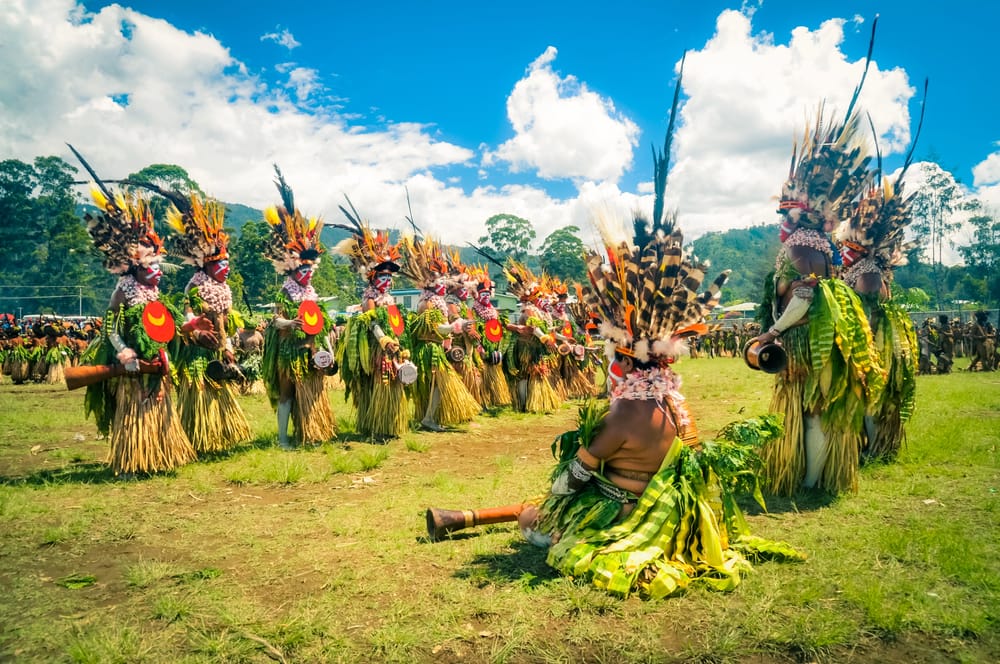
The Highlands and Mount Hagen: up in the cool, fertile Highlands, the culture goes from vivid to overwhelming in the best possible way, especially around the big cultural shows where hundreds of clans gather in full ceremonial dress. It's one of the most extraordinary cultural spectacles left on earth, and it isn't staged for tourists, it's the real thing.
The Sepik River: PNG's great river, lined with villages, spirit houses and a woodcarving tradition that's world-famous among people who know. Slow, immersive travel a very long way from anywhere.
Port Moresby: most trips route through the capital, and it's worth a look, the Nature Park, the National Museum and Art Gallery, Parliament Haus and the Bomana War Cemetery among them. It's also where the safety advice matters most, so move smart and lean on local guidance.
Ready to Go?
Here's the honest summary, because we'd rather you go in clear-eyed than sold a fantasy. Papua New Guinea isn't a working holiday. It's a proper expedition-grade adventure for travellers who want somewhere almost nobody else has been, and a genuine posting for skilled professionals arriving with a contract in hand.
Whichever one you are, the first thing to lock in is your cover. Given PNG's remoteness and medical realities, Global Travel Cover is the piece you actually can't skip, with $0 deductible and a 24/7 emergency line wherever you end up. Get that sorted, plan the rest properly, and PNG will hand you a run of stories nobody back home can match.
Final Thoughts
Papua New Guinea is not the easy option, and that's exactly the point. It won't hand you a working holiday visa, and it won't let you wing a year of casual work. What it offers instead is rarer: one of the last genuinely wild corners of the world, a culture of astonishing depth, reefs and ridgelines most travellers will never see, and the kind of trip you spend the rest of your life referencing.
Come as a visitor and let it astonish you. Come as a sponsored professional and build something real. Either way, come prepared, insured and clear about how the rules actually work, and PNG gives back tenfold. The hardest part was never the visa. It's deciding you're brave enough to go. Consider this your nudge.
Frequently Asked Questions
Does Papua New Guinea have a working holiday visa? No. PNG has no youth-mobility or work-and-travel scheme. To work, you need an employer-sponsored Employment Visa and a work permit, arranged before you arrive.
Can Australians get a visa on arrival in PNG? No. Australian government advice is that Australians must apply for a visa before travelling. You apply online through PNG's official eVisa portal, and complete a Digital Arrival Card within 72 hours of flying.
How long can I stay in PNG as a visitor? A Visitor Visa is generally issued as a single-entry stay of up to 60 days from the date of arrival.
Can I work on a tourist visa in PNG? No, and it's worth being blunt: working on a tourist visa is illegal in PNG. Paid work requires a sponsored Employment Visa.
Is there an age limit? There's no youth working holiday category, so no age-based scheme either way. Work visas depend on your job and sponsor, not your age.
Is PNG safe to travel to? It requires care. The Australian government advises a high degree of caution due to crime, tribal violence and civil unrest, with higher levels in some areas. Use trusted local transport and guides, avoid travelling at night, and follow current official advice.
Do I need travel insurance for PNG? Absolutely. Medical facilities are limited outside Port Moresby and evacuation is a real possibility, so comprehensive travel and medical cover is essential.
One last thing before you go
PNG isn't going to make this easy, and we've spent this whole article being upfront about that rather than selling you something the country doesn't offer. There's no working holiday visa, no landing on a whim and figuring it out over a beer with someone at the hostel, no workaround for the paperwork if you'd rather not deal with it. Every legal path in runs through a visa you sort before you fly, and if you want to work, through an employer who sponsors you.
What it gives you in return is something almost nobody your age has. A ridgeline that means something rather than one that just looks good from a lookout. A reef that drops away into a wreck nobody has photographed to death. A cultural show where hundreds of clans turn up in full ceremonial dress and not one part of it is staged for your benefit. Places where "off the beaten track" stops being a marketing line and starts being a plain description of where you are.
All of which is to say: do it properly and PNG holds nothing back. Get the visa sorted before you fly and only ever through the official portal, use local guides you trust, and make sure your insurance actually covers the diving and the trekking, because out here that isn't a box to tick, it's the whole safety net. Sort those three things and the rest of it is just deciding you're going.

We also publish extensive working holiday visa guides for United States, Canada, Australia, United Kingdom, Germany, France, Spain, Italy, Ireland, Norway, Korea, Argentina, Chile, Hong Kong, Estonia, Netherlands, Austria, Slovakia, Portugal, Peru, Greece, Singapore, Malaysia, Taiwan, Mongolia, Indonesia, Vietnam, Thailand, New Zealand, Chile, Ecuador, Brazil, Israel, Czech
Republic, Mongolia, Papua New Guinea, and more coming.

Jessie Chambers
Jessie is a globetrotter and storyteller behind the Global Work & Travel blog, sharing tips, tales, and insights from cities to remote escapes, informed by the collective experience and real-world knowledge of teams across our business.