



Taiwan Working Holiday Visa - The Complete Guide For 2026
by Jessie Chambers 2 years ago
11 MIN READ
t’s 11pm on a Tuesday in Taipei and you’re eating scallion pancakes at a street stall next to a 7-Eleven, a temple, and a motor scooter repair shop, all three operating at roughly the same level of intensity. A man at the next table is using an app to bid on fish. Three elderly women are performing what appears to be a full-choreographed dance routine in the public square. The scooter shop owner is eating noodles. Everyone is eating something. This is a regular Tuesday in Taiwan. Chaotic energy that really pushes you into the space of L-I-V-I-N-G!
Taiwan is a working holiday destination that doesn’t behave like the others, and honestly, that’s the whole appeal. The visa structure is a bit unhinged (there’s no clean “12 months stamped on arrival” simplicity here, more on that below). The eligibility list is long but specific. And the country itself is one of the more iconic places in Asia: an island the size of Switzerland with the geopolitical profile of somewhere much bigger, the culinary ambition of somewhere much more famous, and a night-market-to-square-kilometre ratio that should genuinely be studied.
For the right traveller, a year here is one of the more original working holiday calls you can make. Here’s how the visa works, what to know before you apply, and what the year actually looks like once you’re through the door.
Quick Summary
- Who: citizens of the 18 countries with bilateral working holiday arrangements with Taiwan (full list below)
- Age: 18 to 30, with a handful of countries to 35
- Duration: 180 days for some and up to 12 months for others
- Participation: once per lifetime for most nationalities; Japanese nationals may participate twice
- Funds required: approximately NT$100,000 (or the equivalent, varies by nationality)
- Apply: in person at your nearest Taipei Economic and Cultural Office (TECO) or equivalent representative office
- Visa-as-work-permit: the working holiday visa itself counts as your work permit; no separate permit required
A Few Things About Taiwan That Aren’t in the Brochure
Before we get into the practical stuff, here’s the context that makes the rest of this guide make sense. It’s giving: underrated, specific, and genuinely one-of-kind.
Taiwan runs on its own terms: its own democracy, its own passport, its own Mandarin dialect (with a Taiwanese accent that slaps), and a strong indigenous heritage that pre-dates Han Chinese settlement by thousands of years. You’ll clock the difference in the first hour. Respect it, and the country opens right up.
The food is the story. Street food here isn’t a scene. It’s the literal infrastructure. Bubble tea was invented in Taiwan (we repeat: THE bubble tea), stinky tofu is on actual school lunch menus, and the Michelin Guide started covering Taipei because it couldn’t keep ignoring what was happening at the night markets. Your food budget will be the easiest line item in your entire year. The Shilin, Raohe, and Ningxia markets in Taipei alone could honestly occupy several weeks of eating. No notes.
Earthquakes are a background feature, not an event. Taiwan sits on the Pacific Ring of Fire, so you will feel one at some point. Locals check the news, shrug, and get back to eating. Build codes are strict, the infrastructure is genuinely built for it, and the annual Wanan Air Defence Drill (an air-raid siren drill that empties streets for 30 minutes) will still catch you off guard the first time. This is part of living here, not a warning against it.
The country is absurdly well-connected. Taipei’s metro is one of the cleanest, cheapest, most quietly iconic public transport systems in Asia. The high-speed rail sends you from the capital to the southern tip of the island in about two hours. Inter-city buses are dirt cheap and run at all hours. If the rest of the world built transport like Taiwan, the rest of the world would be a better place.
Seven-Eleven is a way of life. Not a convenience store. An entire institution. You’ll pay bills there, collect packages, buy concert tickets, print documents, eat a surprisingly decent meal, and withdraw cash, sometimes all in one visit. Within a month, you will have a favourite branch.

Visa at a Glance
The big structural thing to understand: Taiwan’s working holiday visa doesn’t work like Australia’s or Canada’s, where you get one 12-month stamp on arrival. Instead, you enter on a 180-day visa. Within 15 days of that expiring, you apply in-country at the National Immigration Agency for a 180-day extension. The total stay, from the date of first entry, can’t exceed one year. If you leave Taiwan after the visa expires, you can’t re-enter on the same visa. Plan accordingly.
Eligible Countries
Taiwan has bilateral working holiday agreements with 18 countries. Citizens of the following are eligible (verify the current status with your nearest Taipei Economic and Cultural Office, as agreements can be updated or temporarily suspended):
- Australia, Austria, Belgium, Canada, Czech Republic, France, Germany, Hungary, Ireland, Israel, Japan, Luxembourg, Netherlands, New Zealand, Poland, Slovakia, South Korea, United Kingdom
Note: the Israel arrangement has been temporarily suspended as of 2025. Check current status before planning.
Age and Participation
- 18 to 30 (35 for some) inclusive at time of application for all eligible nationalities
- Most nationalities can participate once only
- Japanese nationals can participate twice under the Taiwan-Japan scheme
- If you enter Taiwan on the visa and leave after it expires, you cannot re-enter on the same visa
Core Conditions
- Valid passport, typically required to be valid for at least 12 months from date of application or arrival (varies by country)
- Holiday is the primary purpose of the stay; work is legally permitted but treated as secondary
- The Working Holiday Visa counts as your work permit, no separate work permit needed
- Proof of funds: approximately NT$100,000 or equivalent (exact figure varies by bilateral agreement)
- Valid health insurance covering the full stay
- Return ticket or sufficient funds to purchase one
- Some countries require a clean criminal record certificate
- Cannot be switched or converted to another visa type at the end of the year; you must leave Taiwan or apply from abroad
How to Apply, Step by Step
Applications go through your nearest Taipei Economic and Cultural Office (TECO), Taipei Representative Office, or equivalent, depending on what the Taiwanese representative is called in your country. This is Taiwan’s consular presence operating under the country’s particular diplomatic arrangements. The specifics vary by your nationality, so the guidelines published by the Bureau of Consular Affairs (boca.gov.tw) for your specific country are the single source of truth for your application.
The Application Process
- Find the guidelines for your specific country: every eligible nationality has a dedicated guideline document published by the Bureau of Consular Affairs at boca.gov.tw. Start there.
- Confirm you meet all the eligibility requirements: including the single or dual participation rule, the age cap, and any country-specific documentation.
- Gather your supporting documents: allow 4 to 6 weeks for items like criminal record certificates and medical documents.
- Sort your insurance: a policy that meets the Taiwan Working Holiday Visa requirements is mandatory before submission.
- Submit your application in person: at your nearest TECO, Taipei Representative Office, or equivalent. Some locations require an appointment, so check ahead.
- Pay the application fee: fee amounts vary by nationality. Japanese nationals currently have visa fees waived.
- Wait for processing: typical processing is 2 to 4 weeks, though this varies, so give yourself ample time - we suggest 6-12 months minimum.
- Receive your visa and plan your entry: remember the 180-day clock starts from your first entry. Plan your arrival date with your overall stay in mind.
- Within 15 days of your 180-day expiry, apply for the extension: in-country at a National Immigration Agency service centre. Don’t leave this to the last minute.
Work Life in Taiwan
The visa itself is your work permit under Article 4 of Taiwan’s Regulations on the Permission and Administration of the Employment of Foreign Workers. You don’t need separate paperwork to start working, and you can work across multiple employers throughout your stay.
That said, the visa’s stated purpose is a holiday with work as secondary, and that framing matters for how you approach the year. Expect hospitality, tourism, and English teaching to be the most accessible entry points.
Where Working Holiday Travellers Tend to Find Work
- English teaching: Taiwan has strong demand for English speakers, particularly in cram schools (buxibans) and private tutoring. Native English speakers are in demand, though a TEFL certification opens significantly more doors.
- Hospitality and tourism: hostels, cafes, bars, and tour operators in Taipei, Kaohsiung, Taichung, Hualien, and Kenting. English-speaking travellers are actively sought in tourist-facing roles.
- Cafe and speciality roles: Taiwan’s cafe scene is serious and competitive. Experienced baristas and coffee-industry hires find work quickly in Taipei’s neighbourhoods like Da’an and Xinyi.
- Retail and customer service: in Taipei’s shopping districts and tourist zones, particularly in stores aimed at international visitors.
- Agriculture and farm stays: seasonal opportunities exist in rural Taiwan, particularly around tea plantations, fruit farms, and rice regions. Farm stay networks often provide accommodation in exchange for work.
- Content and creative work: remote and freelance content creation is possible, particularly if you have an existing client base. Taipei has an active digital creative community.
Places You Need to See
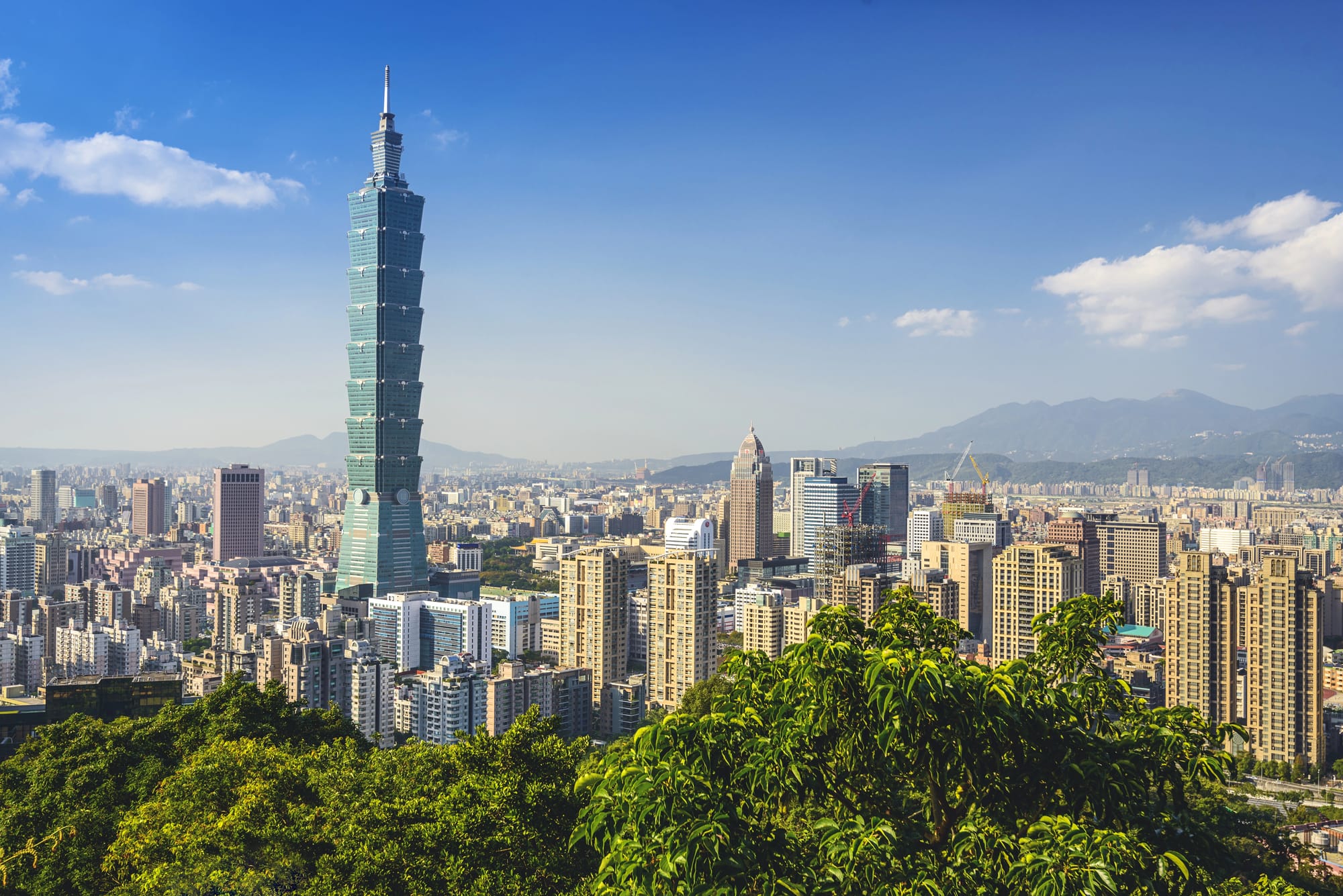
Taipei 101 (the skyscraper that serves VIEWS!) is absolutely worth the ride up, and then the city somehow gets even better the moment you wander into the neighbourhoods around it. Da'an is your leafy, cafe-lined happy place, all tree-shaded streets that turn ridiculously pretty in spring and coffee spots where a quick flat white becomes a whole slow afternoon. Ximending is where the young energy actually lives, genuinely for local kids rather than staged for tour groups. And Beitou might be the one that gets you: a whole natural hot-spring valley tucked into the north of the city, public baths and steaming sulphur streams a short metro ride from downtown. Local tip worth its weight in gold: Shilin Night Market on a quiet Tuesday beats the Saturday crush every time, and figuring that out for yourself is half the fun.
Taroko Gorge Marble canyon, jade-green river, cliffs carved by the Liwu into shapes that barely look real. Taroko is one of the great natural wonders of Asia, and even the drive through it is the kind of thing you'll be talking about for years. Here's the honest bit, because we'd tell a friend the same: the 2024 Hualien earthquake and the storms since have left the park partly reopened, so a lot of the famous trails and suspension bridges are still closed while the repairs happen, and the road runs on set entry times through the day. Base yourself in Hualien on the east coast, an easy train from Taipei, check what's open before you head in, and soak up every bit you can reach. It's healing, and it's still completely worth the trip.
Kaohsiung down on the south coast, Kaohsiung is a former working port that's grown into one of the most quietly creative cities in the country, and it wears it beautifully. The Pier-2 Art Center is a run of old warehouses reborn as galleries, studios and open-air street art, the kind of place you happily lose a whole afternoon in. Then you catch the little ferry across to Cijin Island and find the slower, warmer, seafood-loving Taiwan that feels like a gentle step back in time. Give it a day and you'll quietly start wondering what it would be like to actually live here.
Sun Moon Lake up in the central mountains lies the lake that generations of Taiwanese painters clearly couldn't get enough of, and about two seconds in you'll understand exactly why. Hire a bike and take on the 29-kilometre loop around the shore, a route CNN once named one of the most beautiful in the world, and it genuinely lives up to it. Stop for president-fish in the lakeside Ita Thao village (named after a president who really did love the stuff), then float up on the ropeway to the Formosan Aboriginal Culture Village for one of the warmest introductions you'll get to Taiwan's indigenous communities. It's the kind of day that sneaks straight onto your all-time list.
Jiufen is the hillside town everyone swears inspired the world of Spirited Away. Studio Ghibli has said it didn't, but one look at the place and you'll understand why the story refuses to die. Jiufen is pure magic either way: narrow lantern-lit alleys winding up the mountainside, old teahouses perched above the ocean, and a taro-ball dessert tradition worth the trip all on its own. It's about an hour from Taipei by bus, and the move is to arrive right at dusk, just as the red lanterns start to glow. Prepare to fall a little in love.
Kenting right down at the southern tip, Kenting is Taiwan doing tropical beaches properly: coral reefs, snorkelling that genuinely delivers, and a barefoot weekend rhythm built on board shorts, scooters and not much of a plan. Every April the coast throws itself into Taiwan's biggest beach-and-music celebration, these days led by the Taiwan Music Festival, the much-loved successor to the legendary Spring Scream, and it's every bit as joyful and loud as it sounds. After a winter of city living it's the perfect reset, the total flip side of Taipei. And the seafood? You'll be thinking about it long after you leave, already plotting your way back.
Settling In: The First Month
Taiwan is unusually easy to land in compared to most working holiday destinations. English signage is widespread in Taipei, the transport system is intuitive, and people are genuinely patient with foreigners navigating their way through basic interactions.
- Accommodation: most working holiday travellers start in a hostel in Taipei’s Ximending, Zhongshan, or Da’an neighbourhoods for the first couple of weeks, then move to a shared flat or studio. Facebook groups (Taipei Rental for Foreigners is active), 591 Rental Housing, and Rakuya are the standard long-term rental sites.
- ARC (Alien Resident Certificate - like lol, we’re being dead serious): apply for one at the National Immigration Agency if you plan to stay longer than six months. You’ll need this for a local bank account, phone contract, and most official processes.
- Banking: major banks including Taiwan Bank, Cathay United, and CTBC accept foreign applicants with an ARC. A local account makes receiving wages and paying bills dramatically easier. LINE Pay is the everyday digital wallet everyone uses.
- Transport card: get an EasyCard as soon as you land. It works on every form of public transport in every city, most convenience store purchases, and a lot of vending machines. Taiwan runs on the EasyCard.
- SIM and data: Chunghwa Telecom, Taiwan Mobile, and FarEasTone all offer prepaid plans. Data is cheap and coverage is excellent. Sort this in the first week.
- Language: English is common in Taipei and in tourist regions. Mandarin is worth investing in for anywhere else and for better daily life generally. Traditional characters (not simplified) are used here, which is worth knowing if you’re continuing Chinese studies elsewhere.

Ready to Go?
Taiwan’s working holiday visa is applied for directly at your nearest TECO or Taipei Representative Office. Global Work & Travel doesn’t run a Taiwan working holiday package, but you will need cover to ensure you have all your t’s crossed and i’s dotted! Global Travel Cover
Everything else, the visa itself, the 180-plus-180 rhythm, the extension timing, the arrival basics, is above. Treat this guide as your working document, apply through your TECO, and the year takes care of itself once you’re through the door.
Night-market dinners that literally don’t stop. Metro that works. A coffee scene that punches well above its weight. Bubble tea in its actual birthplace (do not at us). Taroko Gorge on a random Saturday. Eighteen-country eligibility, one year max, once per lifetime for almost everyone. If the passport and the age range fit, the move is starting with the guidelines for your country at www.roc-taiwan.org and then all you have to do is absolutely send it.
If you want to learn about the digital nomad visa's for other countries, we have extensive guides for countries like the United Kingdom, Germany, New Zealand, Italy, Portugal, Spain, Thailand, and Japan.
We also publish extensive working holiday visa guides for United States, Canada, Australia, United Kingdom, Germany, France, Spain, Italy, Ireland, Norway, Korea, Argentina, Chile, Hong Kong, Estonia, Netherlands, Austria, Slovakia, Portugal, Peru, Greece, Singapore, Malaysia, Taiwan, Mongolia, Indonesia, Vietnam, Thailand, New Zealand, Chile, Ecuador, Brazil, Israel, Czech
Republic, Mongolia, Papua New Guinea, and more coming.
This guide was accurate at the time of writing. Visa rules, fees and eligibility change, and agreements can be suspended, so always verify the current requirements for your nationality with your nearest Taipei Economic and Cultural Office before applying. General information only, not immigration advice.

Jessie Chambers
Jessie is a globetrotter and storyteller behind the Global Work & Travel blog, sharing tips, tales, and insights from cities to remote escapes, informed by the collective experience and real-world knowledge of teams across our business.